Stephen Colbert Trolls Pete Hegseth's "Pulp Fiction" Prayer: Why It Matters
Stephen Colbert hilariously calls out Fox News' Pete Hegseth for a misattributed Bible quote. We break down the incident, its implications, and the future outlook for political and religious discourse.
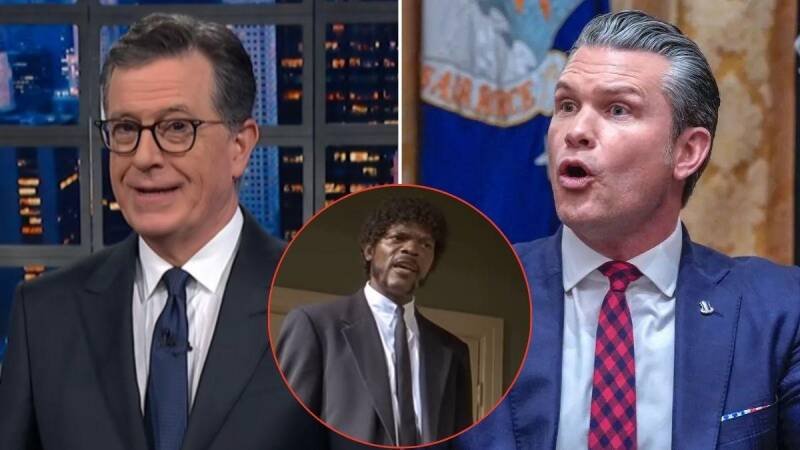
Stephen Colbert Roasts Pete Hegseth's "Pulp Fiction" Prayer
Stephen Colbert, host of "The Late Show," recently delivered a stinging comedic takedown of Fox News personality Pete Hegseth. The incident revolves around Hegseth's misattribution of a quote during a worship service at the Pentagon.
Hegseth, seemingly aiming to offer a prayer rooted in scripture, shared what he believed was a biblical verse. However, the quote was quickly identified as dialogue from the iconic Quentin Tarantino film, "Pulp Fiction." The blunder has since gone viral, attracting widespread ridicule and prompting a scramble for damage control.
The Incident Unpacked
During a worship service at the Pentagon, Hegseth quoted what he thought was scripture. The now infamous quote, however, is actually a modified version of Jules Winnfield’s (Samuel L. Jackson) memorized speech before exacting vengeance in “Pulp Fiction.” This sparked immediate backlash and prompted Colbert’s comedic commentary.
The blunder was particularly embarrassing given the setting – a religious service at the Pentagon. It highlights the importance of verifying sources, especially when speaking on matters of faith and spirituality.
Why This News Matters
This incident, while seemingly humorous on the surface, underscores a broader issue: the spread of misinformation, particularly when intersecting with religion and politics. It highlights the dangers of unverified information and the potential for misrepresentation, even within seemingly serious contexts. In our opinion, it also reveals a degree of carelessness in preparation and fact-checking on Hegseth's part.
Furthermore, the high-profile nature of both Hegseth and Colbert amplifies the significance. Hegseth, as a prominent conservative voice, faces heightened scrutiny. Colbert, known for his sharp wit and political satire, uses the incident to critique a larger trend of misinformation and the blurring lines between entertainment and reality. This could impact how media personalities are perceived by the public.
Our Analysis
The core issue isn't simply the misattributed quote; it's what that mistake represents. It speaks to the potential for even well-known figures to spread inaccurate information, whether intentionally or unintentionally. The incident also raises questions about the level of due diligence expected from individuals in positions of influence.
We believe the reaction to the "Pulp Fiction" prayer is indicative of a growing demand for accuracy and accountability in public discourse. The internet and social media have enabled quicker and more widespread fact-checking, making it harder for inaccuracies to go unnoticed. This demands a greater level of responsibility from anyone sharing information, especially on sensitive topics.
Future Outlook
In the short term, we can expect continued jokes and memes stemming from the incident. Colbert and other comedians will likely continue to reference the situation for comedic effect. More importantly, we anticipate increased pressure on media personalities to verify information before sharing it publicly.
Longer term, this incident may serve as a cautionary tale, reminding individuals of the importance of critical thinking and source verification. It also suggests a need for more robust fact-checking mechanisms within media organizations and a greater emphasis on media literacy among the public. This could impact future media consumption habits.
The Broader Implications
The fallout from this event extends beyond mere embarrassment for Hegseth. It has the potential to erode trust in his pronouncements and, by extension, in the media outlets that platform him. It also opens a wider conversation about the standards and responsibilities of public figures regarding factual accuracy and responsible communication.
Ultimately, the "Pulp Fiction" prayer saga serves as a stark reminder of the power of information and the critical need for responsible sharing.