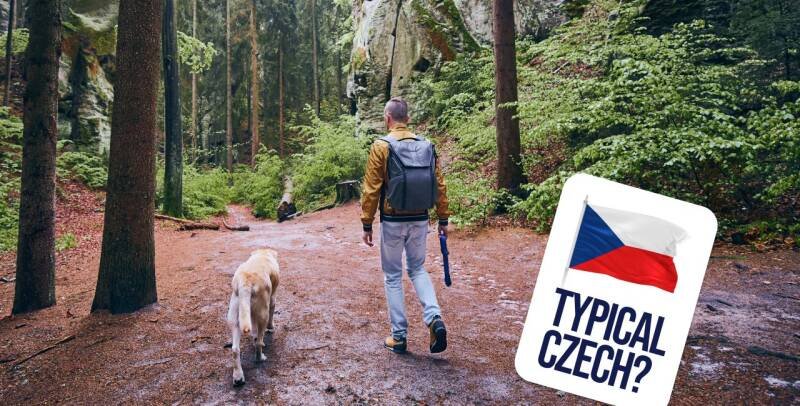
Defining the 'Typical Czech': New Survey Reveals Key Traits
A new survey attempts to define the 'typical Czech' person, revealing characteristics like family orientation, introversion, and self-criticism. Our analysis explores the implications of these findings.
Defining the 'Typical Czech': New Survey Reveals Key Traits
A recent survey in the Czech Republic has bravely attempted to answer a complex question: what are the defining characteristics of the "average Czech" person? The study, which analyzed a wide range of responses, has identified several common traits that researchers believe paint a picture of the nation's collective personality.
Key Traits Identified
The survey highlights several prominent characteristics:
- Family-Oriented: Czechs generally place a strong emphasis on family and close relationships.
- Introverted: The study suggests a tendency towards introversion, indicating a preference for smaller social circles and quieter environments.
- Self-Critical: A notable finding is the self-critical nature of many Czechs, suggesting a tendency towards introspection and self-assessment.
Beyond these, the survey likely explored other facets of Czech life, including values, attitudes towards work, and social beliefs. While the full details of the methodology and all results aren't immediately available in the initial reporting, these initial findings provide a fascinating glimpse into the perceived Czech national character.
Why This News Matters
This survey matters because understanding national identity, even in broad strokes, can be incredibly valuable. It can inform policy decisions, improve intercultural communication, and even shape marketing strategies. Knowing how a population generally views itself can help tailor services and messages to better resonate with the people.
Furthermore, it sparks an important conversation about self-perception. Are these characteristics truly representative of the entire population? How have historical events and societal changes influenced these traits? It encourages Czechs to reflect on their own culture and identity.
Our Analysis
In our opinion, the identified traits of family orientation, introversion, and self-criticism are not surprising, given the Czech Republic's history and cultural context. The emphasis on family likely stems from traditions and the importance of close-knit communities, particularly during periods of political and economic uncertainty.
The perceived introversion could be a reflection of a more reserved public demeanor, a preference for personal space, and a generally less outwardly expressive culture compared to some other European nations. This isn’t necessarily a negative attribute, and could be linked to thoughtfulness and deep consideration before acting.
The self-critical nature is perhaps the most intriguing. It may be rooted in a historical awareness of challenges and a desire for continuous improvement. A healthy dose of self-criticism can be a positive force, driving innovation and progress. However, it's important to ensure it doesn't lead to excessive negativity or a lack of confidence.
These traits, while generalized, can provide a useful framework for understanding the cultural nuances of the Czech Republic. However, it is essential to remember that individuals within any nation are diverse and complex, and these findings should not be used to stereotype or oversimplify the Czech identity.
Future Outlook
Looking ahead, it will be interesting to see how these perceived traits evolve over time. Globalization, increased exposure to different cultures, and ongoing societal changes will undoubtedly shape the Czech national identity in the coming years.
This could impact future generations as globalization mixes cultures. Will younger Czechs retain these traditional traits, or will they adopt different values and behaviors? Further research and ongoing dialogue are needed to track these shifts and understand their implications.
Further studies are needed to provide a more nuanced picture of Czech identity. Qualitative research, such as interviews and focus groups, could offer deeper insights into the lived experiences and perspectives of Czechs from various backgrounds. This type of research would enrich the quantitative findings and help to paint a more complete picture of the "typical Czech."
Ultimately, defining a "typical" anything is a simplification. However, this survey offers a valuable starting point for understanding the prevailing cultural attitudes and values within the Czech Republic. It provides a lens through which we can better appreciate the nuances of Czech society and engage in more meaningful cross-cultural interactions.