India's Domestic Workers: Why a Specific Law is Needed
Explore why India needs a separate law for domestic workers despite government reliance on labor codes. Understand the economic value of household labor and protection for women workers.
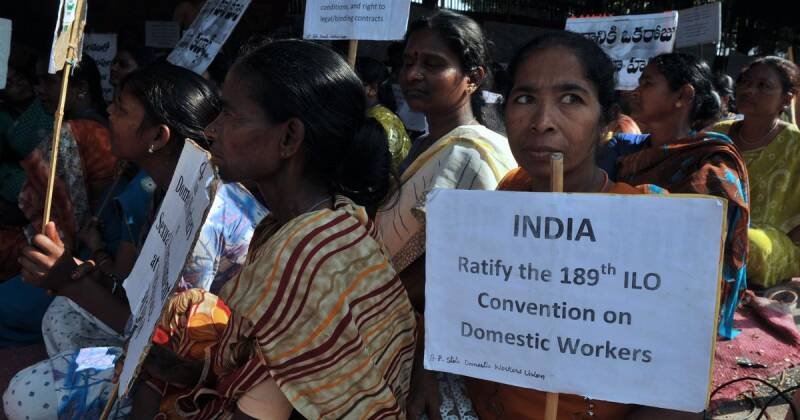



Explore why India needs a separate law for domestic workers despite government reliance on labor codes. Understand the economic value of household labor and protection for women workers.
India's domestic workers, a vast and largely unorganized workforce, are facing a critical juncture. While the central government believes existing and upcoming labor codes are sufficient, many argue that a specific law is essential to truly protect their rights and recognize the significant economic value they contribute.
The Indian government is banking on the new labor codes to cover the needs of domestic workers. These codes aim to consolidate and simplify existing labor laws, broadening their scope to include workers in the unorganized sector. However, critics argue this approach falls short of addressing the unique challenges faced by domestic workers.
The core issue is that the labor codes, while helpful, may not adequately recognize the specific nuances of domestic work. This includes issues like irregular working hours, live-in arrangements, and the often informal nature of the employer-employee relationship. A dedicated law could provide targeted protections and social security benefits tailored to these unique circumstances. It would recognize the economic contribution of this work, which is often invisible in standard economic calculations.
This news matters because it impacts millions of individuals, predominantly women, who contribute significantly to India's economy. Domestic workers enable other members of the household to participate in the formal workforce, contributing to GDP. Failing to adequately protect their rights perpetuates existing inequalities and hinders economic progress. The absence of a specific law leaves them vulnerable to exploitation, unfair dismissal, and lack of access to essential social security benefits.
In our opinion, relying solely on broad labor codes is insufficient. Domestic work presents unique challenges that require specific legal frameworks. These include setting minimum wages, defining working conditions (including reasonable hours and rest periods), and establishing grievance redressal mechanisms. A dedicated law would also facilitate better data collection, allowing for more informed policymaking and targeted interventions.
The argument that existing laws are sufficient ignores the practical realities faced by domestic workers. The informal nature of the work, the power imbalance between employer and employee, and the lack of effective enforcement mechanisms render broad labor laws largely ineffective in this sector.
This situation disproportionately affects women. The vast majority of domestic workers are women, often from marginalized communities. Failing to provide them with adequate legal protection reinforces gender inequality and undermines efforts to empower women economically.
The debate surrounding a dedicated law for domestic workers is likely to continue. Advocacy groups and labor rights organizations will likely intensify their efforts to push for specific legislation. The central government might be persuaded to reconsider its position if presented with compelling evidence of the limitations of the current approach.
This could impact the lives of millions of domestic workers, potentially leading to improved working conditions, better wages, and increased social security coverage. Furthermore, it could set a precedent for recognizing and valuing the contributions of workers in the informal sector more broadly.
The future also hinges on the effective implementation of existing labor codes. If the government can demonstrate that these codes are indeed providing adequate protection and benefits to domestic workers, the argument for a separate law may weaken. However, until concrete evidence emerges, the call for a dedicated legal framework will likely persist.
Ultimately, the goal is to create a system that recognizes the economic value of domestic work, protects the rights of workers, and promotes a fair and equitable employment relationship. Whether this is achieved through existing labor codes or a dedicated law remains to be seen.