Anthropic vs. OpenAI: Diverging Paths on AI Cybersecurity Tools
Anthropic and OpenAI are taking different approaches to releasing AI-powered cybersecurity tools. Learn about their strategies, potential impacts, and the future of AI in cybersecurity.



Anthropic and OpenAI are taking different approaches to releasing AI-powered cybersecurity tools. Learn about their strategies, potential impacts, and the future of AI in cybersecurity.
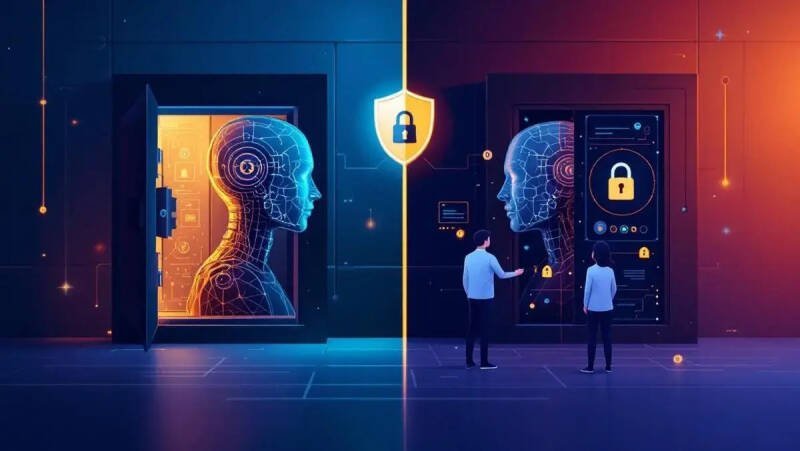
The world of AI is rapidly evolving, and nowhere is this more apparent than in cybersecurity. Two leading AI companies, Anthropic and OpenAI, are taking distinctly different approaches to how they release powerful AI tools designed to combat cyber threats. While OpenAI is opting for wider, albeit vetted, access, Anthropic is keeping its tool under much stricter control. This divergence highlights a fundamental debate about responsible AI deployment and the potential risks and rewards of democratizing access to advanced technologies.
Essentially, Anthropic is proceeding with caution, limiting access to its cybersecurity AI to a small, carefully selected group. OpenAI, on the other hand, is broadening the circle, allowing a larger number of vetted users to experiment with and utilize their tool. This difference in strategy raises questions about the best way to balance innovation with safety in the rapidly developing field of AI cybersecurity.
This split in strategy has significant implications. Cybersecurity is a constant arms race between attackers and defenders. AI promises to be a game-changer, offering the potential to automate threat detection, respond to incidents faster, and even proactively identify vulnerabilities. However, AI can also be used for malicious purposes. The way these powerful tools are distributed and controlled will directly influence the future of digital security. If AI cybersecurity tools are too easily accessible, they could be exploited by malicious actors, amplifying existing threats. If they are too restricted, only large organizations with deep pockets may benefit, potentially widening the security gap between the haves and have-nots.
In our opinion, both Anthropic and OpenAI have valid arguments. Anthropic's cautious approach prioritizes safety and control, minimizing the risk of misuse. This is particularly important given the potential for AI to be weaponized. By carefully vetting users and monitoring the tool's usage, Anthropic hopes to learn more about its capabilities and limitations before wider deployment. OpenAI's broader approach, on the other hand, aims to accelerate innovation and make powerful cybersecurity tools more accessible. By allowing a larger group of researchers and practitioners to experiment, OpenAI hopes to uncover new use cases, identify potential vulnerabilities, and ultimately improve the effectiveness of its AI. This could impact smaller businesses and organizations who cannot afford enterprise-grade cybersecurity but could leverage AI for protection.
The key trade-off is between security and innovation. A more restrictive approach might limit the speed of progress, while a more open approach could increase the risk of misuse. Finding the right balance is crucial, and the strategies of Anthropic and OpenAI represent different points on this spectrum.
The coming months and years will be critical in determining which approach proves more effective. We expect to see increased scrutiny of AI cybersecurity tools, with regulators and policymakers paying close attention to their development and deployment. As AI becomes more sophisticated, the potential for both good and bad will only increase, making responsible development and distribution paramount.
Ultimately, the future of AI in cybersecurity depends on our ability to harness its power for good while mitigating the risks. The contrasting strategies of Anthropic and OpenAI provide valuable insights into this ongoing challenge.