Karnataka High Court Protects Taxpayers: GST Order Overturned
The Karnataka High Court overturned an ex parte GST order and bank attachment, citing violation of natural justice. Understand the implications for taxpayers and future GST proceedings.
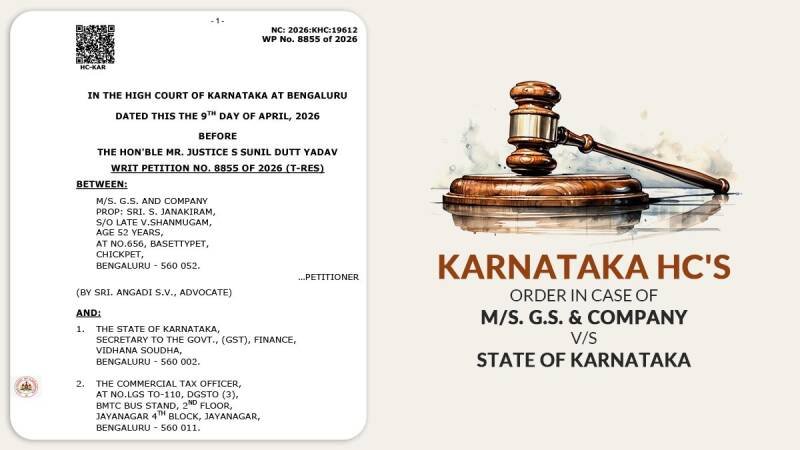



The Karnataka High Court overturned an ex parte GST order and bank attachment, citing violation of natural justice. Understand the implications for taxpayers and future GST proceedings.
In a significant ruling for taxpayers, the Karnataka High Court has set aside an ex parte (meaning "from one party") GST order and subsequent bank account attachment. This decision emphasizes the importance of adhering to principles of natural justice in tax proceedings.
The case involved an assessee (a person liable to pay tax) against whom a GST order was issued without giving them a proper opportunity to be heard. This "ex parte adjudication order" was then followed by the attachment of the assessee's bank account to recover the allegedly owed GST amount.
The assessee challenged the order in the Karnataka High Court, arguing that they were denied a fair hearing, violating the principles of natural justice. The High Court agreed.
Justice S Sunil Dutt Yadav presided over the bench that reviewed the case. After careful consideration, the court determined that the initial adjudication order was indeed passed ex parte, meaning the assessee wasn't properly involved in the proceedings.
As a result, the court not only nullified the GST order but also invalidated all subsequent recovery actions, including the attachment of the bank account. The case was sent back for a complete re-evaluation, ensuring the assessee gets a fair hearing this time.
This ruling is important for several reasons:
In our opinion, the Karnataka High Court's decision is a welcome step towards safeguarding the rights of taxpayers. Ex parte orders, while sometimes necessary, should only be issued as a last resort and after exhausting all reasonable efforts to involve the assessee.
The attachment of a bank account can have severe consequences for a business, potentially crippling its operations. Therefore, it's crucial that such actions are only taken after a thorough and fair assessment of the facts.
The fact that the court ordered a complete re-evaluation suggests that the initial process was flawed, potentially due to oversight or administrative errors. This case serves as a reminder for tax authorities to be diligent in their procedures and ensure compliance with the principles of natural justice.
This could impact the way GST proceedings are conducted in the future, with authorities likely taking extra care to document their efforts to contact and involve assessees before issuing ex parte orders.
Looking ahead, we can expect to see:
Ultimately, this ruling is a positive development for the Indian tax system, promoting fairness, transparency, and accountability.