India Attends Khamenei Memorial: Implications for India-Iran Relations
India's participation in Khamenei's memorial service raises questions about its relationship with Iran and its position on regional conflicts.
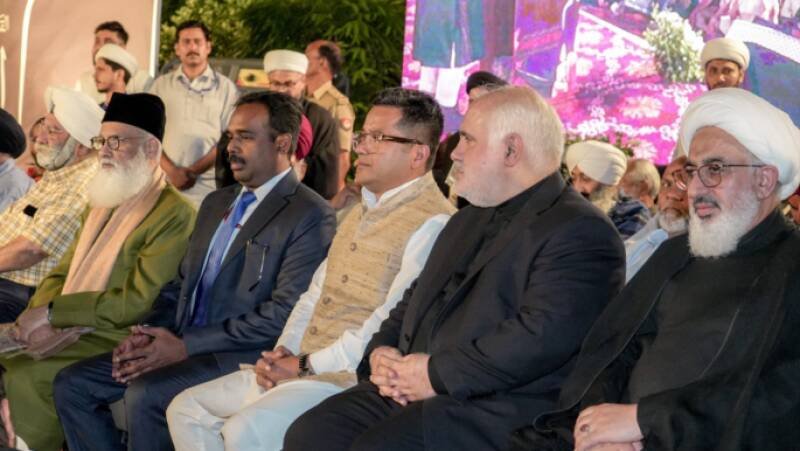



India's participation in Khamenei's memorial service raises questions about its relationship with Iran and its position on regional conflicts.
In a move that has sparked considerable debate, India's Minister of State for External Affairs attended a memorial service held at the Iranian embassy in Delhi for Khamenei, a figure recently killed in a joint US-Israeli airstrike. This incident, which took place on February 28th, triggered a six-week-long conflict in West Asia before a ceasefire was announced. This attendance signals a potentially complex dimension in India's foreign policy.
The memorial service was held to honor Khamenei, whose death resulted from a targeted strike attributed to the US and Israel. The event at the Iranian embassy in Delhi drew attendees, most notably India's Minister of State for External Affairs. This presence has raised eyebrows, given the geopolitical context surrounding Khamenei's death and the ongoing tensions in the region.
This seemingly small act carries significant weight. India maintains a delicate balancing act in its foreign policy, juggling relationships with countries that are often at odds with each other. Maintaining strong ties with Iran is strategically important for India, especially considering energy security and regional connectivity, including projects like the Chabahar port. However, India also has increasingly strong ties with the United States and Israel. Attending this memorial service could be interpreted as a sign of solidarity with Iran, potentially straining relations with the US and Israel. Understanding the nuances of India's foreign policy decisions is critical for gauging its future role on the world stage.
Khamenei's death and the subsequent conflict highlight the volatile situation in West Asia. The US-Israeli airstrike, which many viewed as a targeted assassination, ratcheted up tensions significantly. India's involvement, even through attending a memorial service, reflects its engagement with the region's complexities and the necessity for diplomatic navigation.
In our opinion, India's presence at the memorial service represents a calculated risk. It's unlikely to fundamentally alter India's relationships with the US or Israel, but it's a clear signal that India values its relationship with Iran. This could impact future negotiations and diplomatic efforts in the region, with India potentially acting as a mediator or facilitator. It is important to remember that India is facing increasing pressure to choose sides in the intensifying global rivalries, and this action could be seen as an attempt to maintain its independent stance. This move also allows India to maintain open communication channels with Iran, crucial for intelligence gathering and maintaining stability in the region.
The situation remains fluid. We anticipate continued scrutiny of India's foreign policy decisions in the coming months. Here are a few potential scenarios:
Ultimately, India's actions will depend on its assessment of its national interests and the evolving geopolitical landscape. The key takeaway is that this event underscores the complexities of India's foreign policy and its strategic importance in a turbulent world. This could also encourage other nations to re-evaluate their own relationships with involved parties.