China's Solid-State Battery Breakthrough: A Game Changer for EVs?
China's Chery Automobile unveils a solid-state battery with a 1,500km range. Learn about this tech, its impact on the EV market, and future outlook.
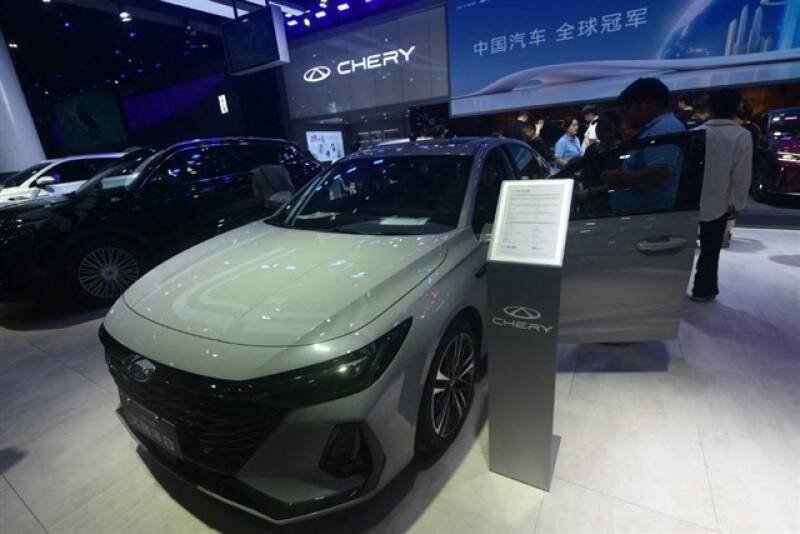



China's Chery Automobile unveils a solid-state battery with a 1,500km range. Learn about this tech, its impact on the EV market, and future outlook.
The race for better electric vehicle (EV) batteries is heating up, and China is making significant strides. Chery Automobile, a major Chinese car manufacturer, recently unveiled a solid-state battery prototype that boasts an impressive driving range of over 1,500 kilometers (approximately 932 miles). This announcement positions solid-state battery technology as a cornerstone of Chery's future EV strategy.
Traditional EV batteries, like the lithium-ion batteries in your phone or Tesla, use a liquid electrolyte to conduct electricity. Solid-state batteries replace this liquid with a solid material, offering several potential advantages:
While still in development, solid-state batteries are widely considered the next big leap in battery technology, potentially revolutionizing the EV industry.
Chery's announcement isn't just about one company's progress; it signals a broader push by Chinese automakers to lead the solid-state battery revolution. A 1,500km driving range would significantly alleviate "range anxiety," a major barrier to EV adoption for many consumers. This could accelerate the global transition to electric vehicles. Moreover, the development and mass production of these batteries could strengthen China's position as a leader in the EV market.
In our opinion, Chery's announcement is exciting, but it's important to approach it with a degree of caution. Unveiling a prototype is different from mass production. Significant challenges remain in scaling up solid-state battery manufacturing to meet the demands of the automotive industry. Cost, materials sourcing, and manufacturing processes are all hurdles that need to be overcome. This could take years, if not longer.
However, the commitment from a major player like Chery is a strong indicator that the technology is maturing. The competition in the EV battery space is fierce, with companies worldwide investing heavily in solid-state battery research and development. This competition will likely drive innovation and accelerate the commercialization of these advanced batteries. In our view, the pressure to compete will force these companies to deliver better batteries, faster.
The future of EVs is undoubtedly intertwined with the progress of battery technology. While widespread adoption of solid-state batteries is still some years away, the trajectory is promising. We expect to see further advancements in energy density, charging speeds, and safety in the coming years. This could impact the types of vehicles we see on the road, potentially enabling longer-range trucks and SUVs, as well as smaller, more efficient city cars.
Furthermore, the development of solid-state batteries could extend beyond EVs to other applications such as energy storage systems for homes and businesses, and portable electronic devices. The potential market is vast, and the companies that successfully navigate the challenges of solid-state battery technology stand to gain a significant competitive advantage.
Here's what we think will happen in the short-term:
Ultimately, the transition to solid-state batteries will be a gradual process, but the potential benefits are too significant to ignore. China's push in this area is a clear signal that the future of EVs is being shaped now.