Ancient Banyan Tree Thrives After Historic Transplant in India
A 188-year-old banyan tree in Nagpur, India, successfully survives a complex transplant, highlighting innovative conservation efforts. Learn why this matters and what the future holds.



A 188-year-old banyan tree in Nagpur, India, successfully survives a complex transplant, highlighting innovative conservation efforts. Learn why this matters and what the future holds.
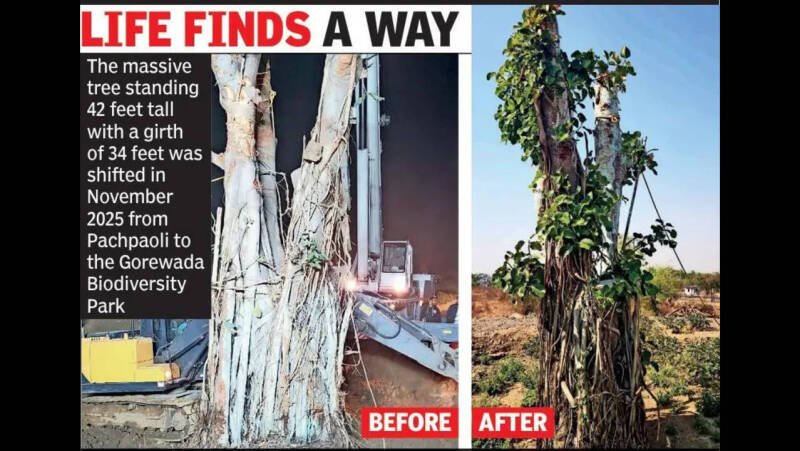
In a remarkable feat of environmental conservation, a 188-year-old banyan tree has survived a challenging transplant in Nagpur, India. The tree, initially located in the Pachpaoli area, was carefully moved to the Gorewada Biodiversity Park nearly four months ago, and it's now showing positive signs of adaptation and growth. This successful relocation represents a significant victory for urban forestry and showcases innovative techniques for preserving valuable natural heritage.
This particular banyan tree isn't just any tree; it's a living monument with a history spanning almost two centuries. It stood as a silent witness to the evolution of Nagpur, a symbol of resilience and longevity. The decision to transplant it arose from potential threats to its existence at its original location, emphasizing the need for proactive conservation measures.
Transplanting a tree of this size and age is an incredibly complex undertaking. It requires meticulous planning, specialized equipment, and a deep understanding of arboriculture. The process likely involved:
The successful transplant of this ancient banyan tree is more than just a feel-good story; it highlights several crucial points:
In our opinion, the successful transplant of this banyan tree is a testament to the dedication and expertise of the individuals and organizations involved. It underscores the importance of investing in innovative conservation strategies to protect our planet's valuable natural resources. This success could pave the way for more ambitious tree relocation projects in the future. Furthermore, the fact that the tree is thriving within Gorewada Biodiversity Park is an added benefit, enriching the park's ecosystem and providing an invaluable educational resource.
However, it's also important to acknowledge that tree transplants, especially of this magnitude, are resource-intensive and carry inherent risks. Long-term monitoring is crucial to ensure the tree's continued health and adaptation. Careful planning and consideration of potential environmental impacts are essential for future projects.
The long-term success of this transplanted banyan tree hinges on continued monitoring and care. Researchers and arborists will likely be closely observing its growth, health, and adaptation to its new environment. The knowledge gained from this project could be invaluable for future tree relocation efforts.
This could impact how city planners approach urban development, potentially leading to more creative solutions that prioritize the preservation of existing trees. We also anticipate seeing increased investment in urban forestry and conservation initiatives. The story of this banyan tree serves as a reminder that even in the face of rapid urbanization, it's possible to protect and cherish our natural heritage.
Despite the initial success, potential challenges remain:
The story of the 188-year-old banyan tree is a symbol of hope and a reminder of the power of human ingenuity and dedication in protecting our planet. It demonstrates that with careful planning and a commitment to conservation, we can preserve even the most ancient and valuable elements of our natural world for future generations.
























