Picasso's Guernica: Controversy Over Moving the Anti-War Masterpiece
A request to move Picasso's Guernica, a powerful anti-war painting, from Madrid to the Basque Country has ignited a fierce debate about its cultural significance and preservation.
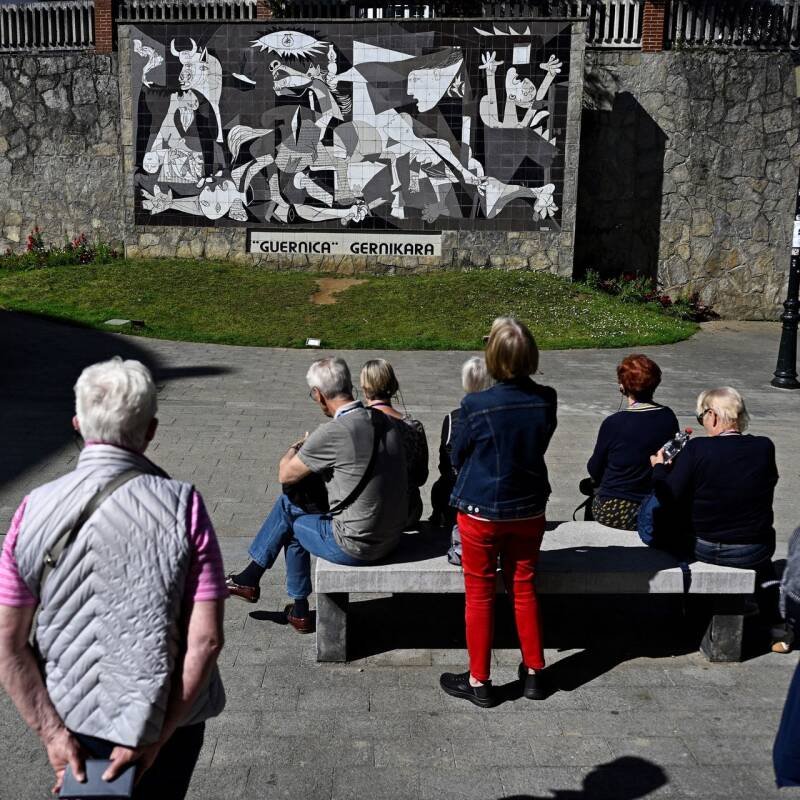



A request to move Picasso's Guernica, a powerful anti-war painting, from Madrid to the Basque Country has ignited a fierce debate about its cultural significance and preservation.
Picasso's "Guernica," a monumental black and white painting depicting the horrors of the 1937 bombing of the Basque town of Guernica during the Spanish Civil War, is once again at the heart of a heated debate. This time, the controversy revolves around a request to relocate the iconic artwork from its current home in the Reina Sofia Museum in Madrid to the Basque Country, closer to the event it portrays.
For years, voices within the Basque Country have expressed a desire for "Guernica" to be displayed in their region, arguing that it rightfully belongs there due to its profound connection to their history and identity. They believe that having the painting in the Basque Country would serve as a powerful symbol of remembrance and reconciliation.
However, this request has been met with resistance, primarily due to concerns about the painting's delicate condition and the potential risks associated with moving it. "Guernica" is a massive work, and any relocation attempt would undoubtedly pose a significant challenge to its preservation.
The "Guernica" relocation debate highlights a fundamental tension between preserving cultural heritage and recognizing its cultural significance to specific communities. It forces us to confront questions about who has the right to possess and display such powerful symbols of history and memory. Furthermore, it brings attention to the immense responsibility involved in safeguarding fragile artworks for future generations.
This isn't just an art world squabble. It touches upon issues of regional identity, historical trauma, and the role of art in collective memory. The decision will set a precedent for how other culturally significant but fragile artworks are handled in the future.
In our opinion, the debate surrounding "Guernica" is about more than just bricks and mortar. It's about ownership of history and the emotional connection between a people and a piece of art that represents their suffering. While the concerns regarding the painting's conservation are valid and should be paramount, dismissing the Basque Country's desire to house the painting solely on those grounds feels insensitive.
The Reina Sofia Museum has done an excellent job of preserving "Guernica" for many years. However, could a compromise be reached? Perhaps a state-of-the-art facility could be built in the Basque Country, specifically designed to meet the stringent environmental requirements for the painting's long-term preservation. This, of course, would require significant investment and careful planning.
Furthermore, the symbolic value of the painting in its current location should also be considered. Its presence in Madrid, a city with its own complex history during the Spanish Civil War, may offer a broader national message of reconciliation and remembrance.
The future of "Guernica" remains uncertain. A decision on whether to relocate the painting will likely involve extensive consultations with art conservation experts, government officials, and representatives from both the Reina Sofia Museum and the Basque Country. We anticipate a thorough assessment of the risks and benefits of any potential move, with the painting's preservation taking precedence.
This could impact how museums approach requests for repatriation or relocation of artworks with strong cultural ties to specific regions or communities. A successful resolution, one that balances preservation concerns with cultural sensitivities, could serve as a model for future similar situations. Conversely, a mishandled decision could lead to further divisions and resentment.
Ultimately, the fate of "Guernica" rests on finding a solution that respects both its artistic integrity and its profound significance as a symbol of peace and reconciliation.