Neoga Native Helps Recover Artemis II Spacecraft: Why It Matters
Learn how a U.S. Navy sailor from Neoga, Illinois, played a vital role in recovering the Artemis II Orion spacecraft. Discover why this mission is significant and what the future holds for space exploration.
Local Sailor Plays Key Role in Artemis II Recovery
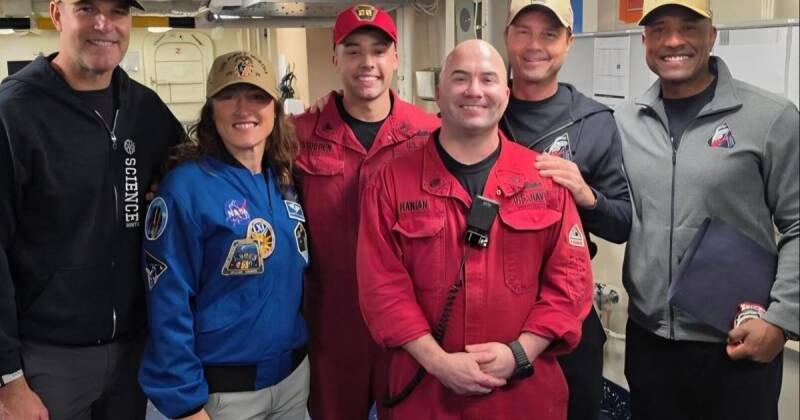
Macen Stodden, a 2023 graduate of Neoga High School in Illinois, played a crucial role in the recovery of the Artemis II Orion spacecraft. Stodden served as a ballast control operator aboard the USS John P. Murtha, the vessel tasked with retrieving the capsule after its journey around the moon.
The Artemis II Mission: A Brief Overview
The Artemis II mission is a significant step in NASA's ambitious plan to return humans to the moon. Unlike the unmanned Artemis I mission, Artemis II will carry a crew of four astronauts on a lunar flyby. This mission is designed to test the Orion spacecraft's systems in a real-world environment before a landing is attempted in later Artemis missions.
Stodden's Role: Ballast Control Operator
As a ballast control operator, Stodden was responsible for managing the ship's stability during the critical recovery operation. This involved carefully controlling the distribution of water in the ship's ballast tanks to counteract the forces exerted when the Orion spacecraft was lifted from the ocean. This is a high-pressure, precision-demanding job that requires technical skill and attention to detail. Without proper ballast control, the recovery operation could be severely compromised, potentially damaging the spacecraft or endangering the crew.
Why This News Matters
This story highlights the important contributions of individuals from small towns to large-scale, globally significant projects. Stodden's involvement in the Artemis II recovery showcases the diverse range of skills and talent within the U.S. Navy and the critical support roles that make space exploration possible. The Artemis program itself is designed to foster international collaboration and inspire the next generation of scientists, engineers, and explorers. Successfully executing missions like Artemis II is crucial for maintaining U.S. leadership in space and advancing our understanding of the universe.
Our Analysis
The successful recovery of the Orion spacecraft is a testament to the meticulous planning and execution of the Artemis program. Stodden's role, though perhaps not as widely publicized as that of the astronauts, is equally vital. It emphasizes that space exploration isn't just about rockets and astronauts; it's a complex undertaking involving countless individuals with specialized skills working together seamlessly. In our opinion, Stodden's achievement is a source of pride for Neoga and a powerful example for young people considering careers in STEM fields and military service.
Potential Impact
This event could impact perceptions of STEM careers. Seeing a local individual playing a key role in a high-profile mission like Artemis II may encourage students in Neoga and surrounding areas to pursue science, technology, engineering, and mathematics education. It demonstrates that impactful careers are accessible to individuals from all backgrounds. The successful completion of Artemis II will provide valuable data and experience for future Artemis missions. Ultimately, the work of Stodden and others on the USS John P. Murtha contributes directly to the safety and success of human spaceflight.
Future Outlook
The Artemis program is an ongoing endeavor with a series of increasingly complex missions planned for the coming years. Artemis III aims to land humans on the moon near the lunar south pole, and subsequent missions will establish a sustainable lunar base. The data and experience gained from Artemis II will be invaluable in preparing for these future missions. We can expect to see continued innovation in spacecraft design, propulsion systems, and life support technology as NASA strives to achieve its ambitious goals.
Looking Ahead
- Further Artemis missions will rely on skilled personnel like Stodden.
- The development of advanced technologies for space exploration will continue.
- International collaboration will be crucial for achieving long-term goals in space.
The success of individuals like Macen Stodden is key to realizing these ambitious plans. His dedication and expertise contribute directly to humanity's continued exploration of space.