Maserati's Six-Valve Engine Failure: Why Innovation Doesn't Always Win
Explore the story of Maserati's ambitious six-valve-per-cylinder engine and why it ultimately failed, revealing key insights into engine design limitations and innovation challenges.
Maserati's Six-Valve Engine Failure: A Lesson in Automotive Innovation
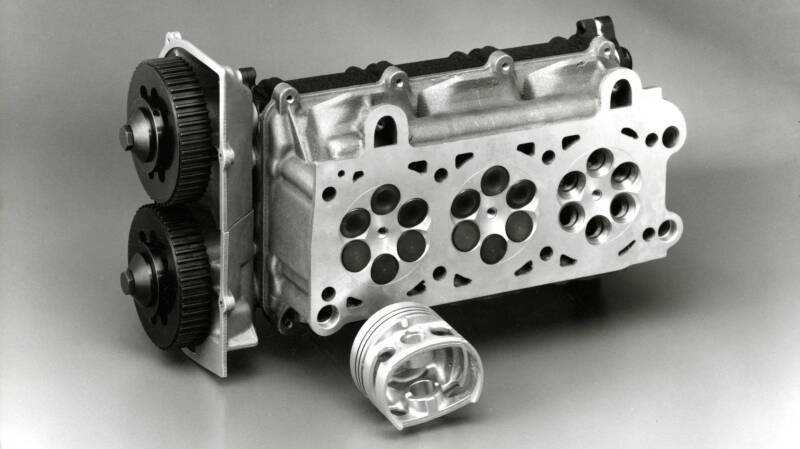
Maserati, known for its luxury cars and racing pedigree, once attempted a radical engineering feat: a six-valve-per-cylinder engine. The goal was simple: to outperform rivals through sheer innovation. However, this ambition ran headfirst into a critical barrier, a barrier that explains why no other manufacturer has pursued this design.
The Quest for More Valves
The fundamental idea behind increasing the number of valves per cylinder is to improve engine breathing. More valves, theoretically, allow for a greater volume of air and fuel to enter the cylinder and exhaust gases to exit. This enhanced airflow should lead to more efficient combustion and, consequently, increased power and torque.
Most high-performance engines today opt for four valves per cylinder (two intake, two exhaust). This configuration offers a good balance between airflow and complexity. Maserati, however, sought to push the boundaries even further.
Maserati's Ambitious Design
Maserati's six-valve design aimed for maximum airflow. The increased number of valves should have dramatically boosted engine performance. However, the execution proved incredibly challenging, leading to significant problems.
The biggest hurdle was the incredibly complex cylinder head design. Cramming six valves into a relatively small space meant extremely small valves, intricate valve train geometry, and increased manufacturing difficulty. The resulting design was fragile and prone to failures.
Furthermore, the benefits of adding two extra valves were likely marginal. The flow increase may not have been significant enough to justify the added complexity and reliability risks. The small valve size also created limitations on the valve lift and duration, further reducing potential performance gains.
Why This News Matters
The story of Maserati's six-valve engine serves as a cautionary tale for engineers and innovators. It highlights the importance of not only pursuing groundbreaking ideas but also considering the practical limitations and trade-offs involved. Sometimes, a simpler, more reliable solution can be more effective than a complex one. This example reinforces that optimization, reliability, and manufacturability are just as critical to design as theoretical performance advantages.
Our Analysis
In our opinion, Maserati's six-valve engine was a case of over-engineering. The potential performance gains were likely outweighed by the increased complexity, manufacturing costs, and reliability issues. While innovation is essential for progress, it needs to be grounded in practicality and a thorough understanding of the underlying physics and engineering principles. This engine was a prime example where 'more' did not necessarily equal 'better'.
The issue wasn't the idea in principle, but the limitations of technology at the time. Perhaps with today's advanced materials, manufacturing processes and design software, a six-valve engine could be achieved more reliably. However, with current engine designs already achieving high performance, there's little financial incentive to pursue such a complex goal.
Future Outlook
The six-valve engine concept is unlikely to resurface in the near future for standard automotive engines. Current engine technology, particularly forced induction (turbocharging and supercharging) and advanced fuel injection systems, offers more efficient and reliable methods for enhancing engine performance.
This failure could impact how car companies develop their powerplants. We believe car manufacturers will be less likely to pursue highly exotic or experimental engine designs that offer marginal benefits but carry substantial risks. The focus will likely remain on optimizing existing technologies and exploring new avenues like electric powertrains.
However, the pursuit of innovation should never cease. The lessons learned from Maserati's six-valve engine can inform future engineering endeavors, reminding us to carefully consider the trade-offs and limitations inherent in complex designs. Perhaps, in specialized racing applications or future advanced technologies, similar high valve count engine concepts could be revisited, but only if the engineering challenges can be overcome efficiently and reliably.