Glowing Thief: Fish Steals Light From Its Prey - A Deep Dive
Discover the golden sweeper, a fascinating fish that steals bioluminescence from its prey. Learn about kleptoproteinism and its implications for marine ecosystems.
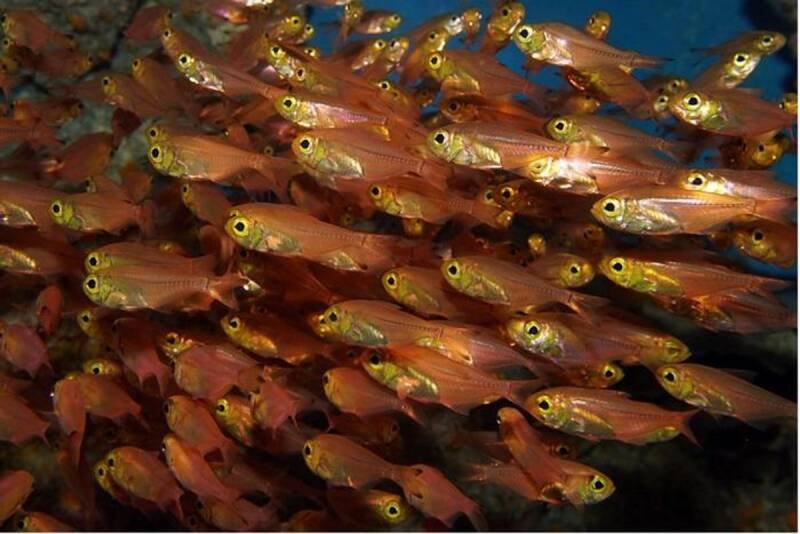



Discover the golden sweeper, a fascinating fish that steals bioluminescence from its prey. Learn about kleptoproteinism and its implications for marine ecosystems.
Imagine a fish that doesn't create its own light, but rather, steals it from its dinner! That's the fascinating reality of the golden sweeper (Parapriacanthus ransonneti), a small, unassuming fish found in the Indo-Pacific region. Scientists have discovered that this fish employs a unique survival strategy called "kleptoproteinism," essentially stealing bioluminescent proteins from its prey to generate its own glow.
Bioluminescence is the production and emission of light by a living organism. It's a common phenomenon in the deep sea, used for various purposes like attracting mates, hunting prey, and defense. This light is produced through a chemical reaction involving a light-emitting molecule called luciferin and an enzyme called luciferase.
Kleptoproteinism takes this a step further. Instead of producing the light-generating proteins themselves, an organism acquires them by consuming another organism that already possesses them. This is a relatively rare strategy, making the golden sweeper a truly unique creature.
Previously, it was understood that the golden sweeper ate copepods, small crustaceans which are known to be bioluminescent. Scientists had also known the the sweeper fish glowed. However, only recently has it been confirmed that the fish uses the copepod bioluminescence proteins to glow.
The discovery of kleptoproteinism in the golden sweeper is significant for several reasons:
In our opinion, the golden sweeper's kleptoproteinism is a testament to the incredible adaptability of life in the ocean. The fact that this small fish has evolved to not only hunt its prey but also "steal" its light-producing machinery is truly remarkable. This discovery also underscores the importance of continued research into marine biodiversity. There's so much we still don't know about the ocean, and each new discovery like this has the potential to revolutionize our understanding of biology and ecology.
This could impact how we view food chains in the marine environment. It's not just about who eats whom, but also about what valuable resources are being transferred along the way.
The term "stealing" is used somewhat figuratively here. The golden sweeper is consuming its prey as part of its natural feeding behavior. However, the fact that it's specifically utilizing the prey's bioluminescent proteins for its own light production sets it apart from other predators.
Future research should focus on:
Ultimately, studying the golden sweeper and its kleptoproteinism is not just about understanding a single fish. It's about gaining a deeper appreciation for the complexity, diversity, and interconnectedness of the marine world. These studies will continue to provide valuable insights for scientists for years to come.
This could provide insights into better understanding how marine ecosystems function, and in turn better protect them.
























