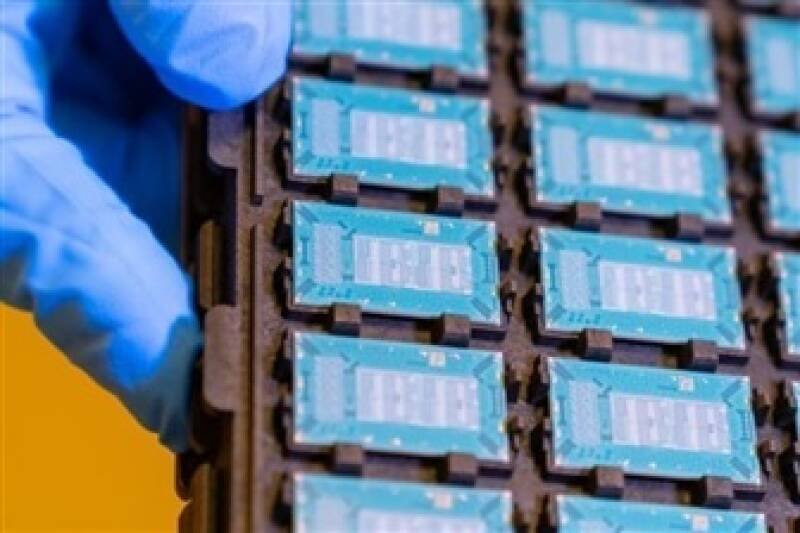
Glass Substrates: Intel, Samsung Race to Mass Production for AI Chips
Intel and Samsung Electro-Mechanics are ramping up glass substrate production for high-performance AI chips. Learn why this matters and what it means for the future of chip technology.
Glass Substrates: Intel and Samsung Electro-Mechanics Lead the Charge Towards Mass Production for AI Chips
The race to develop faster, more powerful AI is driving innovation at every level of the technology stack, and the foundation upon which these advanced chips are built is no exception. Glass substrates, a potential game-changer in chip packaging, are moving closer to mass production, with Intel and Samsung Electro-Mechanics (SEMCO) leading the charge. According to recent reports and industry sources, the shift reflects the growing need for larger, more efficient chips capable of handling demanding AI workloads.
What are Glass Substrates and Why Are They Important?
Traditional chip substrates are typically made of organic materials. Glass substrates offer several advantages, including:
* **Improved Signal Integrity:** Glass has superior electrical properties, allowing for faster and cleaner signal transmission. This is crucial for high-performance AI chips requiring massive data transfer rates.
* **Greater Dimensional Stability:** Glass is less prone to warping and distortion compared to organic materials, which enables tighter tolerances and higher density interconnects. This means more components can be packed into a smaller space.
* **Better Heat Dissipation:** Glass can dissipate heat more effectively, which is critical for preventing overheating in power-hungry AI chips.
* **Larger Panel Sizes:** Glass substrates can be manufactured in larger sizes than traditional organic substrates, which allows for more chips to be produced on a single panel, reducing manufacturing costs and increasing efficiency.
The Race is On: Intel and Samsung Electro-Mechanics Lead the Way
Intel and Samsung Electro-Mechanics are heavily invested in glass substrate technology. They are actively working towards achieving mass production, focusing on improving manufacturing processes and ensuring yield stability. Achieving high yields is crucial for making glass substrates commercially viable. Currently, yields are a significant challenge in manufacturing glass substrates compared to traditional organic ones.
Why This News Matters
The move towards glass substrates could revolutionize the semiconductor industry, particularly in the high-performance computing and AI sectors. This advancement will enable the creation of more powerful and efficient chips, which in turn will fuel further innovation in AI, data centers, and other demanding applications. Successful mass production of glass substrates could result in substantial cost savings and performance improvements, giving companies that adopt this technology a significant competitive advantage.
Our Analysis
In our opinion, the transition to glass substrates represents a significant inflection point for the semiconductor industry. The investments being made by Intel and Samsung Electro-Mechanics highlight the immense potential of this technology.
The key challenge now lies in achieving consistently high yields in manufacturing. While the potential benefits are substantial, overcoming the manufacturing hurdles is critical for widespread adoption. This could impact the timeline of future chip development.
The success of glass substrates depends heavily on factors like:
* **Materials Science Breakthroughs:** Continued research and development in glass materials and manufacturing processes will be essential.
* **Equipment Development:** Specialized equipment will be needed to handle and process glass substrates.
* **Collaboration:** Collaboration between chip manufacturers, substrate suppliers, and equipment vendors will be vital.
Future Outlook
The next few years will be crucial for determining the long-term viability of glass substrates. We anticipate that Intel and Samsung Electro-Mechanics will continue to invest heavily in research and development, and we expect to see incremental improvements in manufacturing yields.
We believe that widespread adoption of glass substrates is likely to occur in the latter half of the decade, assuming that the manufacturing challenges can be overcome. This shift could usher in a new era of high-performance computing, enabling the development of more powerful and efficient AI systems. This technology will be essential in applications that demand the most processing power, such as autonomous driving, advanced data analytics, and cutting-edge scientific research.