Rare Portuguese Man-of-War Washing Ashore in Alabama: What You Need to Know
Rare and dangerous Portuguese Man-of-War are washing ashore in Alabama. Learn about the risks, what to do if stung, and why this is happening.
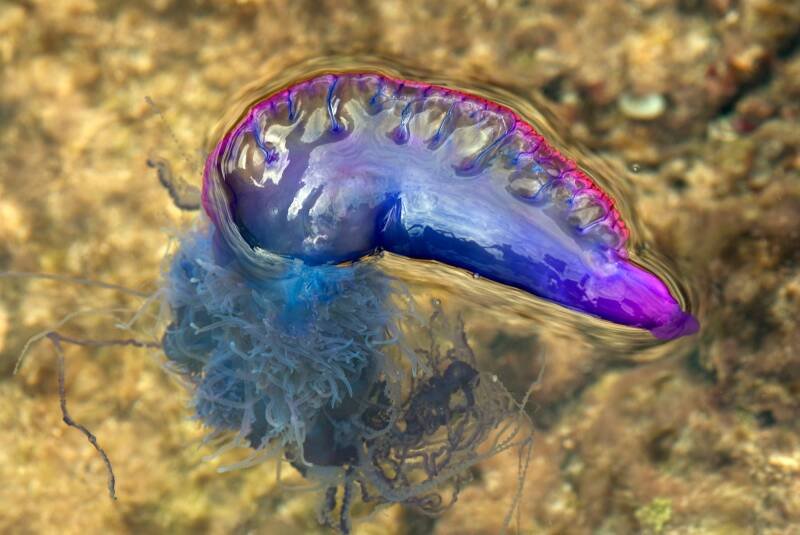



Rare and dangerous Portuguese Man-of-War are washing ashore in Alabama. Learn about the risks, what to do if stung, and why this is happening.
Alabama beaches are experiencing an unusual influx of Portuguese Man-of-War, a jellyfish-like creature known for its painful sting. These vibrant blue and purple siphonophores, often mistaken for jellyfish, can pose a significant risk to beachgoers, even weeks after they've washed ashore.
Despite its jellyfish-like appearance, the Portuguese Man-of-War isn't a single organism. It's a colony of organisms working together, called a siphonophore. It's characterized by a gas-filled bladder (the "sail") that floats on the surface of the water, and long, venomous tentacles that can deliver a powerful sting. These tentacles can extend up to 165 feet in length, although they are typically much shorter.
The sting from a Portuguese Man-of-War is intensely painful and can cause welts, muscle cramps, nausea, vomiting, and even fever. While rarely fatal, the sting can be dangerous, particularly for children, the elderly, and those with allergies.
If you spot a Portuguese Man-of-War on the beach, do not touch it, even if it appears dead. The stinging cells remain active long after the creature is no longer alive. Report the sighting to local authorities or beach patrol if possible.
If you are stung, here's what you should do:
The appearance of Portuguese Man-of-War on Alabama beaches raises several concerns. First and foremost, it poses a direct threat to public safety. The potential for painful stings can disrupt beach activities and create a hazardous environment for swimmers and beachgoers. It's crucial for visitors and residents to be aware of the risks and take necessary precautions.
Second, this event could indicate changes in ocean currents, weather patterns, or prey availability, leading these creatures to appear in areas where they are not normally seen. Observing the distribution of marine life helps us understand the health of the ocean ecosystem.
In our opinion, the increased presence of Portuguese Man-of-War in Alabama is likely due to a combination of factors. Strong winds and currents can easily carry these creatures closer to shore. Changes in water temperature might also play a role, affecting their distribution and abundance. It's also possible that prey availability is influencing their movements. If their food source is available closer to shore, they will be carried to shore with it.
This event underscores the importance of monitoring marine environments and understanding the complex interactions between weather, climate, and marine life. Further research is needed to determine the precise causes of this influx and to predict future occurrences.
We believe it's crucial for local authorities to implement effective communication strategies to inform the public about the presence of these creatures and provide guidance on how to stay safe. This could include posting warning signs on beaches, issuing alerts through social media, and educating beachgoers about the risks and treatment of stings.
The future outlook is uncertain. It is possible that these sightings of Portuguese Man-of-War are a one-off event, or that they will become more frequent due to changing environmental conditions. Climate change, in particular, could lead to more extreme weather events and altered ocean currents, potentially influencing the distribution of marine species.
This could impact tourism and recreational activities on Alabama beaches. If the presence of stinging creatures becomes a persistent problem, it could deter visitors and negatively impact the local economy.
Continued monitoring and research are essential to understand the long-term implications of these events. By tracking the distribution and abundance of Portuguese Man-of-War and other marine species, scientists can gain valuable insights into the health of the ocean ecosystem and develop strategies to mitigate potential risks to human health and the environment. Preparing citizens to be more aware of dangers around marine wildlife is an important step.
























