Orion Spacecraft Toilet Clogged: A $23 Million Problem in Space
The Orion spacecraft's $23 million toilet is clogged on its return journey from the Moon. Learn why this matters, our analysis, and the future outlook.



The Orion spacecraft's $23 million toilet is clogged on its return journey from the Moon. Learn why this matters, our analysis, and the future outlook.
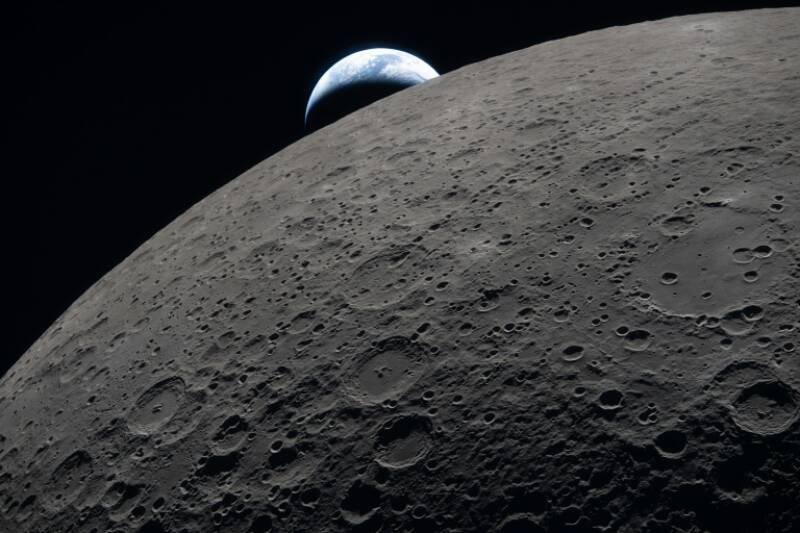
Even in the vast expanse of space, plumbing problems can crop up. NASA's Orion spacecraft, fresh from a successful trip around the Moon, is experiencing a rather earthly issue: a clogged toilet. This isn't your average household plumbing mishap; this is a $23 million piece of equipment malfunctioning hundreds of thousands of miles from Earth.
The Orion spacecraft is currently on its return journey to Earth. The journey itself has been considered smooth, but as the saying goes, even the best-laid plans can run into trouble. In this case, the trouble is a toilet that's decided to stage a sit-in, refusing to flush properly.
While a clogged toilet might seem trivial in the grand scheme of space exploration, it highlights the critical importance of reliable life support systems during long-duration missions. Imagine if this issue had occurred during the journey *to* the Moon or, worse, during a future mission to Mars. The implications could be severe. The health and well-being of the astronauts are paramount, and a malfunctioning toilet, no matter how advanced, poses a threat to both.
Furthermore, this incident brings attention to the cost and complexity of space travel. When even a basic function like waste disposal requires a multi-million dollar solution, it underscores the enormous engineering and financial challenges involved in venturing beyond our planet. It also reinforces the need for robust testing and redundancy in all spacecraft systems.
In our opinion, this situation underscores the need for more rigorous testing of all onboard systems, particularly life support. The fact that a multi-million dollar toilet could fail during a relatively short mission raises questions about the robustness of the design and the effectiveness of pre-flight checks.
It's also important to remember that space travel is inherently risky. Despite decades of experience, unexpected issues will inevitably arise. The key is to have contingency plans in place and to learn from each incident to improve future missions.
Consider this: the issue isn't just about removing waste. It's about the entire system which likely includes recycling components. Failure to have this system functioning at a high level could introduce other issues, like potable water limitations.
This incident is likely to prompt a thorough investigation into the design and operation of the Orion's toilet system. NASA will undoubtedly use the data gathered from this malfunction to improve the reliability of future spacecraft toilets. This will likely include design modifications, improved testing protocols, and potentially, redundant systems to provide backup in case of failure.
This could impact the timeline and budget of future Artemis missions. If significant design changes are required, it could delay the launch of subsequent missions or increase the overall cost of the program. However, this is a necessary investment to ensure the safety and success of future space exploration endeavors.
Looking further ahead, as space missions become longer and more ambitious (e.g., missions to Mars), the reliability of life support systems will become even more critical. Expect to see significant investment in the development of closed-loop systems that recycle waste and minimize the need for resupply from Earth.
Ultimately, even a seemingly minor problem like a clogged toilet provides valuable lessons for the future of space exploration. By learning from these experiences, we can continue to push the boundaries of human knowledge and venture further into the cosmos.