Northrop Grumman's Diamond Chip Breakthrough: Protecting Military Radar Systems
Northrop Grumman's diamond chip technology doubles power tolerance for military radar protection. Learn about the implications and future of this breakthrough.
Northrop Grumman's Diamond Chip: A Leap Forward in Military Radar Protection
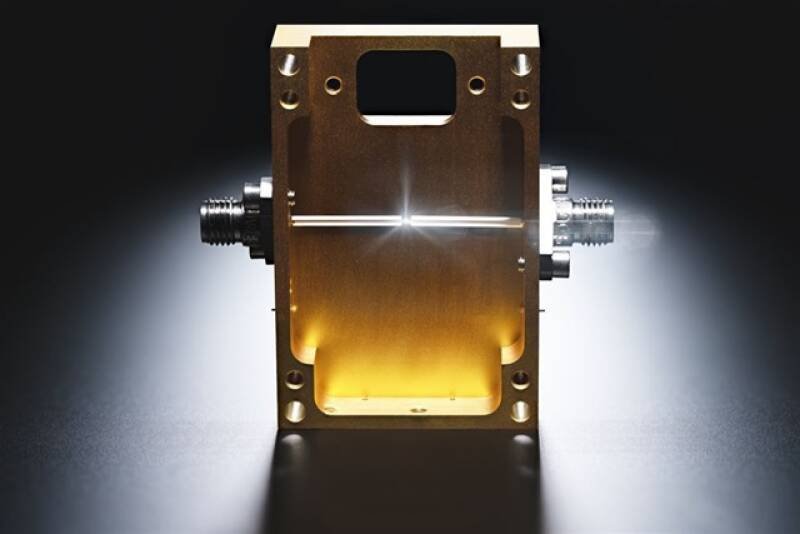
Northrop Grumman has announced a significant advancement in the realm of military technology. Their Microelectronics Center has successfully tested a diamond-based receiver protection component that can withstand over 100 watts of power. This is more than double the power tolerance of existing comparable products, signaling a major leap forward in protecting sensitive military radar systems from high-power threats.
What's So Special About Diamond?
Diamond, in this context, isn't just a pretty gemstone. It possesses exceptional thermal conductivity and electrical properties. These characteristics make it ideally suited for handling extreme power levels in radio-frequency (RF) systems. Essentially, the diamond chip acts as a shield, absorbing and dissipating excess energy before it can damage the radar's sensitive receiver.
This technology is crucial because modern warfare increasingly relies on sophisticated radar systems for surveillance, targeting, and communication. Protecting these systems from jamming or directed energy attacks is paramount.
The Power of 100 Watts: A Game Changer
The fact that Northrop Grumman's diamond chip withstood over 100 watts in testing is a huge deal. This significantly enhances the resilience of radar systems against electronic warfare tactics, allowing them to maintain functionality even under intense interference. This increased power tolerance translates directly into improved reliability and performance in challenging battlefield environments.
Why This News Matters
This breakthrough has significant implications for the defense industry. By providing enhanced protection for military radar systems, this technology helps to ensure the effectiveness of critical military operations. It also opens the door for the development of even more powerful and resilient radar systems in the future. In our opinion, this advancement could reshape the landscape of electronic warfare.
Our Analysis
Northrop Grumman's success with this diamond chip is a testament to the company's commitment to innovation in defense technology. It also highlights the growing importance of advanced materials like diamond in addressing the challenges of modern warfare.
The implications extend beyond simply improving existing radar systems. This technology has the potential to enable entirely new radar architectures and capabilities, allowing for more powerful and versatile systems that can operate in increasingly complex and contested environments. This could impact the future of sensor technology greatly.
The existing comparable products likely utilize materials with lower thermal conductivity, making them more susceptible to overheating and damage from high-power signals. The diamond chip effectively addresses this limitation, offering a significant performance advantage.
Future Outlook
Looking ahead, we anticipate that diamond-based receiver protection components will become increasingly prevalent in military RF systems worldwide. This technology is not only applicable to radar systems but also has potential applications in communication systems, electronic warfare systems, and other high-power RF applications.
Potential Applications Beyond Radar
* **Communication Systems:** Protecting sensitive communication receivers from jamming and interference.
* **Electronic Warfare Systems:** Enhancing the power handling capability of electronic warfare jammers.
* **Directed Energy Weapons:** Managing the high power levels involved in directed energy weapons systems.
Challenges and Opportunities
While the future looks promising, there are still challenges to overcome. The cost of producing high-quality diamond chips can be a barrier to widespread adoption. However, as manufacturing techniques improve and demand increases, we expect the cost to decrease over time. Further research and development will also be crucial to optimize the performance and reliability of these components.
Northrop Grumman's success provides a compelling proof-of-concept, paving the way for further investment and innovation in diamond-based electronics for military applications.