Indonesia's Neutral Foreign Policy: Balancing Act or Missed Opportunity?
Explore Indonesia's "in-between" foreign policy, its reasons, potential drawbacks, and future implications. Our analysis examines if this neutral stance strengthens Indonesia or leaves it isolated.
Indonesia's Balancing Act: Navigating the World with a Neutral Foreign Policy
Indonesia, the world's fourth most populous nation and a significant player in Southeast Asia, has long pursued a foreign policy characterized by neutrality. This "in-between" approach, where it avoids taking sides in major geopolitical conflicts, is deeply rooted in its historical experience and national interests. But is this consistent middle ground a strength or a weakness?
The Rationale Behind Indonesia's Neutrality
Indonesia's commitment to non-alignment dates back to its independence movement. The country's founding fathers, like Sukarno, envisioned a nation that could chart its own course independent of the Cold War superpowers. This principle has persisted, fueled by a desire to maintain good relations with all countries and prioritize national development.
Furthermore, Indonesia's diverse population and complex domestic political landscape make it challenging to align unequivocally with any single power bloc. A neutral stance allows the government to appeal to a broader range of domestic constituencies and avoid alienating important segments of society. Economically, this allows Indonesia to engage with multiple partners, maximizing trade and investment opportunities.
Potential Drawbacks of Remaining Neutral
While neutrality offers certain advantages, it also presents potential drawbacks. By refusing to take a firm stand on key international issues, Indonesia risks alienating potential allies and diminishing its influence on the global stage.
Some argue that this cautious approach could be interpreted as a lack of leadership, particularly in a region facing complex challenges like the South China Sea dispute and rising geopolitical competition between the United States and China. In our opinion, a more assertive role, while risky, could solidify Indonesia's position as a regional leader.
Why This News Matters
Understanding Indonesia's foreign policy is crucial because of its significant geopolitical weight in Southeast Asia. As a leading member of ASEAN and a major economic power, Indonesia's actions and decisions have far-reaching implications for regional stability and global affairs. Its commitment to neutrality shapes its interactions with major powers and influences the dynamics of the entire region. Whether its neutrality strengthens or weakens its position ultimately affects the balance of power in the Indo-Pacific.
Our Analysis
Indonesia's "in-between" foreign policy is a calculated strategy designed to protect its national interests and maintain stability. The country's leadership believes that by remaining neutral, it can navigate the complex geopolitical landscape without getting entangled in potentially damaging conflicts.
However, this approach is not without its limitations. By avoiding taking sides, Indonesia may miss opportunities to exert greater influence on the international stage and shape the global agenda. In our opinion, a more nuanced approach, one that balances neutrality with strategic engagement on key issues, might be more effective in the long run. This could involve advocating for specific principles or solutions without necessarily aligning with any particular power.
Furthermore, this could impact Indonesia's standing within ASEAN. While it aims to be seen as a cooperative member, its lack of strong positions on some issues could be seen as a reluctance to lead, something ASEAN needs more of in a complex global environment.
Future Outlook
Looking ahead, Indonesia's foreign policy is likely to remain rooted in its commitment to non-alignment. However, as the global landscape continues to evolve, Indonesia may need to adapt its approach to address emerging challenges and opportunities.
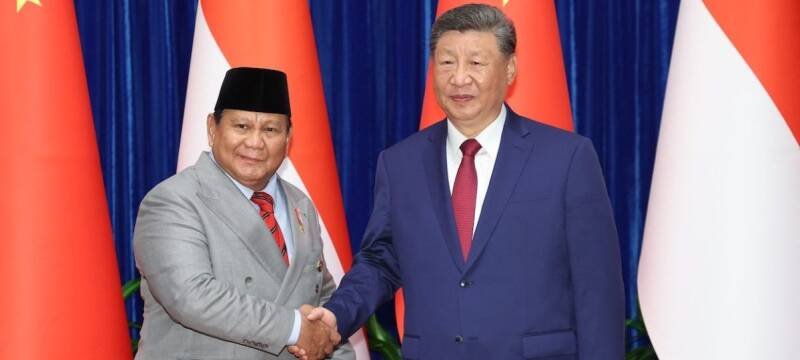
Specifically, Indonesia will need to carefully manage its relationships with the United States and China, as these two superpowers increasingly compete for influence in the Indo-Pacific. Finding a way to balance its economic ties with China and its security partnerships with the United States will be a key test of Indonesia's diplomatic skills.
Moreover, Indonesia will need to address pressing global issues such as climate change, terrorism, and economic inequality. This will require a more proactive and collaborative approach, working with other countries to find common solutions. It's our belief that Indonesia's growing economic power and democratic credentials position it well to play a more prominent role in addressing these challenges.