Engraved Memories: Art Exhibit Cuts Deep with Reflections on Philippine History and Struggle
Explore the "Engraved Memories" art exhibit featuring printmakers Resty Flores and Brian Barrios. Discover their powerful reflections on Philippine history, struggle, and cultural identity.
Engraved Memories: Art Exhibit Cuts Deep with Reflections on Philippine History and Struggle
Engraved Memories: Art Exhibit Cuts Deep with Reflections on Philippine History and Struggle
A thought-provoking art exhibit, "Engraved Memories," recently concluded at Eskinita Art Farm in Tanauan, Batangas. The exhibit showcased the rubbercut prints of Resty Flores and Brian Barrios, two artists engaging in a quiet yet potent dialogue about memory, struggle, and the enduring marks of history on everyday life in the Philippines. From March 8 to April 19, visitors experienced a collection of works that explored a shared cultural consciousness shaped by postcolonial wounds and the contradictions inherent in inherited systems.
A Collaboration Born from Shared Experience
The collaboration between Flores and Barrios seems to have come together organically. Barrios described the show as a somewhat spontaneous idea, taking advantage of a newly opened small space at Eskinita Art Farm perfect for showcasing paperworks. While the exhibit's inception was unplanned, the conceptual alignment between the two artists was clear. Both artists, through their distinct styles, addressed the struggles and daily realities faced by Philippine society.
Flores emphasized that their shared ideas stemmed from the interconnectedness of people and places, and were rooted in their personal experiences of engaging with and learning from their chosen subjects. This foundation of lived experience is evident in the depth and resonance of their work.
The Mark of Memory: Scars of History
The title "Engraved Memories" encapsulates both the literal process of printmaking – the physical act of carving – and a deeper metaphorical meaning. Flores connects the word "engraved" to the Filipino word "ukit," meaning "carving," which he likens to the scars left by historical events on a nation. This concept of memory as both a wound and a historical record permeated the exhibit.
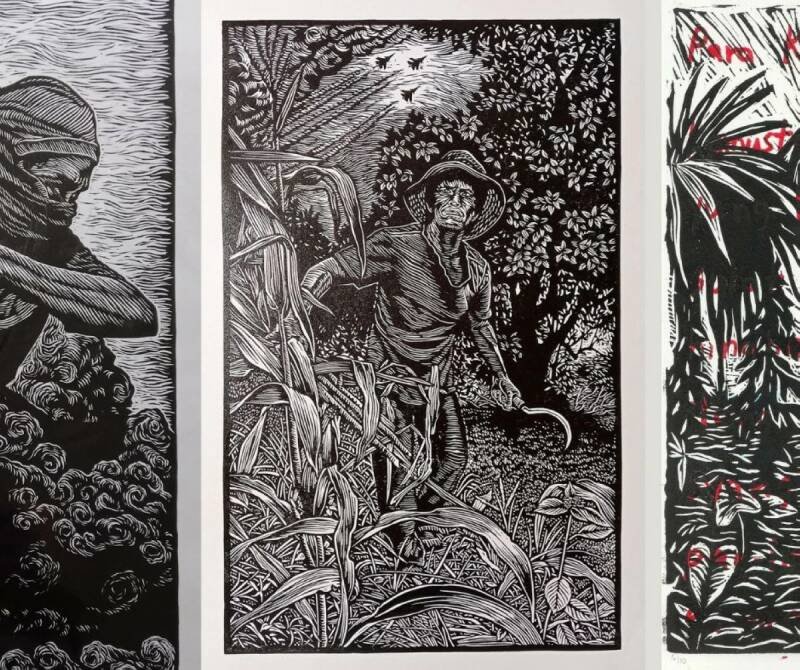
Barrios's works, such as "Anahawan" and "Kawayanan," presented densely layered natural landscapes. While seemingly lush at first glance, the compositions evoke a sense of unease, with frenetic carved lines suggesting an underlying tension. The addition of handwritten text in red disrupts the natural scenes, symbolizing human intrusion, the weight of memory, or even acts of protest. These works prompt reflection on the delicate balance between nature and human impact.
In contrast, Flores's "Alab" focused on the human figure. The piece depicts two masked individuals emerging from a field of swirling, flame-like patterns. One figure holds a torch, and both appear to be moving against an unseen force. The meticulous carving, with its tight, repetitive lines, creates a sense of emotional intensity, evoking themes of resistance, survival, and collective endurance. This piece resonated as both a historical commentary and a reflection on contemporary struggles.
Process and Reflection
Despite the serious themes explored, both artists emphasized an open and enjoyable creative process. Barrios shared that they simply enjoyed the making and learning involved. Flores echoed this sentiment, stating that the freedom to choose their theme contributed to a smooth production process. The works were produced simultaneously, reinforcing a sense of shared artistic rhythm. However, challenges arose, with Flores noting the difficulty of carving the intricate details in his piece "Bulalakaw." This highlights how the labor and the process become embedded within the final artwork.
Why This News Matters
"Engraved Memories" provides a valuable platform for dialogue about Philippine history, identity, and social issues. The exhibit underscores the importance of art as a tool for critical reflection and social commentary. In our opinion, exhibitions like this play a crucial role in fostering a deeper understanding of the Philippines' past and present, prompting viewers to engage with complex narratives and consider their own roles in shaping the future.
Our Analysis
The success of "Engraved Memories" lies in its ability to connect with viewers on both an intellectual and emotional level. The artists' use of the printmaking medium effectively conveys the idea of "engraved memories," highlighting the lasting impact of historical events. The contrasting styles of Flores and Barrios create a dynamic and engaging viewing experience. In our opinion, the exhibit's strength is in its subtlety; it doesn't offer easy answers but rather encourages viewers to contemplate the complexities of Philippine society. This could impact viewers to think more critically about Filipino societal issues.
Future Outlook
The positive reception of "Engraved Memories" suggests a growing interest in art that addresses social and political issues in the Philippines. This could mean more galleries and art spaces dedicating themselves to these kinds of exhibitions. We anticipate that Resty Flores and Brian Barrios will continue to develop their artistic practices, further exploring themes of memory, identity, and struggle. Their work has the potential to inspire other artists and contribute to a more vibrant and engaged art scene in the Philippines. This could impact the artists to continue advocating for societal issues through their art.