Artemis Mission Update: Crew on Track for Lunar Arrival and Distance Record
The Artemis mission is progressing smoothly! The Orion capsule successfully performed a critical engine burn, setting the stage for a record-breaking journey to the Moon. Learn more about this milestone and its significance.
Artemis Mission: Orion Capsule Successfully Course Corrects, Moon Arrival Imminent
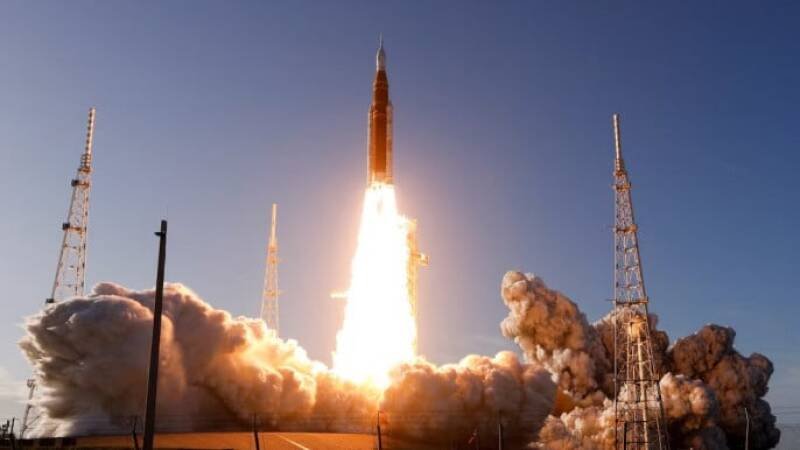
The Artemis 1 mission, NASA's ambitious return to the Moon, has achieved another significant milestone. The Orion spacecraft, carrying a crew of mannequins and sensors, successfully executed a critical engine burn, precisely adjusting its trajectory towards lunar orbit. This maneuver puts the capsule on track to enter the Moon's sphere of gravitational influence by Sunday morning.
This mission is not just about reaching the Moon; it's about pushing the boundaries of space exploration. As Orion continues its journey, it is poised to surpass the distance record previously held by the ill-fated Apollo 13 mission in 1970. This underscores the advancements in technology and mission planning that have occurred in the intervening decades.
What Was the Engine Burn For?
The engine burn was a crucial course correction. Small deviations in the initial trajectory can accumulate over vast distances, potentially causing the spacecraft to miss its intended lunar orbit. This carefully timed and executed burn ensured that Orion remains on the optimal path for a successful lunar flyby and eventual return to Earth.
Why This News Matters
The successful course correction signifies that the Artemis program is progressing according to plan. This is crucial for maintaining momentum and public support for future lunar missions, including those that will carry human astronauts to the lunar surface. A successful Artemis 1 mission is vital for demonstrating the capabilities of the Orion spacecraft and the Space Launch System (SLS) rocket, paving the way for a sustained human presence on the Moon.
Furthermore, this mission is gathering valuable data about the space environment, radiation levels, and the performance of the spacecraft's systems. This data will be used to refine future mission designs and ensure the safety of astronauts on subsequent Artemis missions. This could impact the timeline for future missions.
Our Analysis
In our opinion, the Artemis 1 mission is a testament to human ingenuity and perseverance. The challenges of deep space exploration are immense, but the potential rewards are even greater. The successful engine burn demonstrates NASA's commitment to precision and safety, and instills confidence in the program's ability to achieve its ambitious goals.
The fact that Orion is poised to break the Apollo 13 distance record is particularly significant. It highlights the advancements in spacecraft design, navigation, and propulsion that have been made since the Apollo era. While Apollo 13 faced a life-threatening crisis, Orion is designed with enhanced safety features and redundant systems to mitigate risks.
Future Outlook
Looking ahead, the Artemis program has ambitious plans for future lunar exploration. Artemis 2 will carry a crew of astronauts on a lunar flyby, and Artemis 3 is planned to land astronauts on the Moon's south pole, a region believed to contain significant deposits of water ice.
These missions will not only expand our scientific knowledge of the Moon, but also lay the groundwork for a sustainable human presence in cislunar space and, eventually, on Mars. The Artemis program is envisioned as a stepping stone to further exploration of the solar system.
This could impact the future of space exploration and scientific discovery. If the Artemis program is successful, it could lead to the development of new technologies and capabilities that will enable us to explore the universe in unprecedented ways.
In the near term, we will be closely monitoring Orion's entry into the Moon's gravitational influence and its subsequent lunar flyby. These events will provide critical data about the spacecraft's performance and the lunar environment. This is a space to watch!