Thermalright Mini-PC Boasts 10 Gbps Ethernet and Strix Halo APU: A Powerful Compact Solution
Thermalright unveils a new mini-PC featuring AMD's Strix Halo APU, 10 Gbps Ethernet, and liquid cooling. Explore its features, potential impact, and future outlook.
Thermalright Enters the Mini-PC Arena with AMD Strix Halo Powerhouse
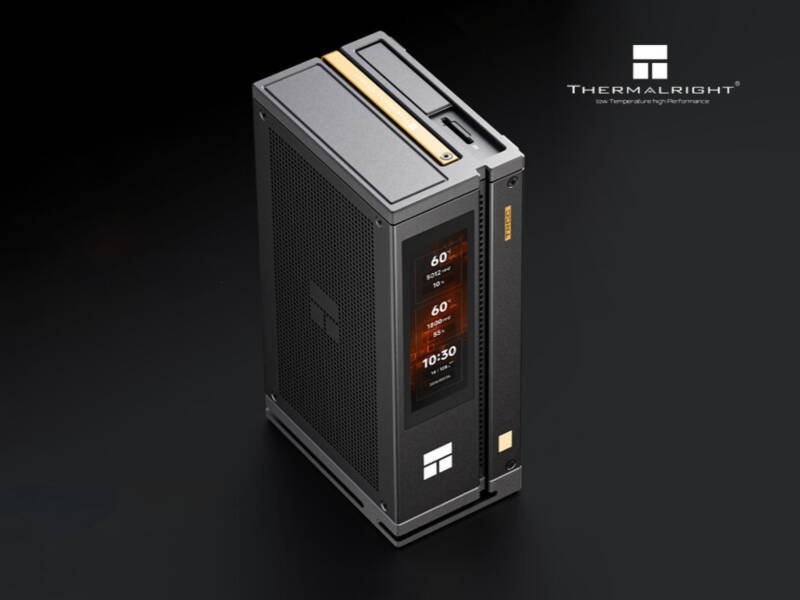
Thermalright, a well-known name in PC cooling solutions, has announced its entry into the mini-PC market with the AI HydroNous R1. This isn't your average small computer; it's a high-end device built around AMD's powerful Strix Halo APU, designed for demanding tasks and potentially even gaming.
Key Features of the AI HydroNous R1
- AMD Strix Halo APU: This APU, officially called the Ryzen AI Max+ 395, is the heart of the system, promising significant integrated graphics performance and AI capabilities.
- 128 GB RAM: The announcement highlights the impressive 128 GB RAM configuration, enabling smooth multitasking and handling of large datasets. We understand this also enables up to 96GB VRAM.
- Liquid Cooling: To keep the Strix Halo APU running at its peak, Thermalright employs liquid cooling. This allows for higher sustained clock speeds and better overall performance compared to passively cooled or traditionally air-cooled mini-PCs.
- 10 Gbps Ethernet: This ultra-fast wired networking connection provides blazing-fast data transfer speeds, crucial for network-intensive applications and large file transfers.
Why This News Matters
The AI HydroNous R1 is significant for several reasons:
- Showcases Strix Halo Potential: It demonstrates the capabilities of AMD's Strix Halo APU in a compact form factor, potentially influencing future mini-PC designs.
- Competition in the Mini-PC Market: It introduces a new player offering a high-performance alternative to existing options, potentially driving innovation and price competition.
- Blurs the Line Between Desktops and Mini-PCs: With its powerful components and advanced cooling, it challenges the traditional limitations of mini-PCs, making them viable for more demanding workloads.
Our Analysis
In our opinion, Thermalright's AI HydroNous R1 is a bold move. The combination of the Strix Halo APU, ample RAM, and liquid cooling creates a compelling package for users seeking a powerful yet compact computing solution. The inclusion of 10 Gbps Ethernet is a forward-thinking decision that caters to users with high-bandwidth needs.
However, the high-end specifications likely come with a premium price tag. The target audience for this mini-PC will likely be professionals, developers, and enthusiasts who prioritize performance and are willing to pay for it. It's unlikely to be a mass-market product, at least initially.
Potential Use Cases
The AI HydroNous R1 could be ideal for:
- Content Creation: Video editing, graphic design, and 3D modeling.
- Software Development: Compiling code, running virtual machines, and AI/ML tasks.
- High-End Gaming: Although not explicitly marketed as a gaming PC, the Strix Halo's integrated graphics could offer decent gaming performance at lower resolutions and settings.
- Edge Computing: Deploying AI applications and processing data at the edge of the network.
Future Outlook
The success of the AI HydroNous R1 will depend on its price, availability, and real-world performance. If Thermalright can deliver on its promises and price it competitively, it could carve out a niche in the high-end mini-PC market.
This could impact other manufacturers to develop their own Strix Halo-based mini-PCs, potentially leading to a new generation of powerful and compact computing devices. We anticipate seeing more advancements in cooling technology for mini-PCs as manufacturers push the boundaries of performance.
It's also important to consider the ongoing chip shortage, which could affect the availability and pricing of the Strix Halo APU and other key components. How Thermalright navigates these challenges will be crucial to its success in the mini-PC market.