South-East Ex-Governors Forum Endorses Tinubu: Analysis and Implications
Former South-East governors form a forum and endorse Tinubu for re-election. We analyze the potential impact of this move on Nigerian politics and its future outlook.



Former South-East governors form a forum and endorse Tinubu for re-election. We analyze the potential impact of this move on Nigerian politics and its future outlook.
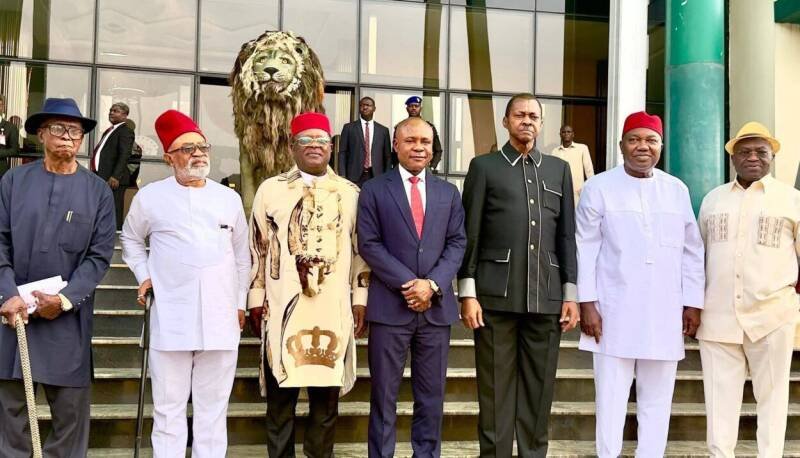
A new political force has emerged in Nigeria: a forum comprised of former governors from the South-East region. This group recently announced its endorsement of President Bola Ahmed Tinubu for re-election, signaling a potentially significant shift in the political landscape.
The formation of this forum suggests a coordinated effort to influence political discourse and potentially consolidate power within the South-East zone. While details surrounding the forum's specific goals remain somewhat vague, their immediate endorsement of Tinubu speaks volumes.
Ebonyi State Governor, Francis Nwifuru, revealed that the ex-governors have started a forum. The group also threw its weight behind President Bola Tinubu’s administration. Umahi clarified that not all former governors were present, reiterating that broader participation is expected at the next gathering.
This development is crucial for several reasons. Firstly, the South-East region has historically been a stronghold of opposition parties. An endorsement from a body of prominent South-East figures could sway public opinion and potentially weaken the support base of rival candidates, particularly if Peter Obi decides to run again.
Secondly, it demonstrates a possible realignment of political alliances. If this forum can effectively mobilize support for Tinubu within the South-East, it could significantly impact the outcome of future elections. This could lead to more federal projects and infrastructure development in the region which might lead to reduced agitation.
In our opinion, this endorsement should be viewed with a healthy dose of skepticism. While the forum claims to represent the interests of the South-East, it's essential to consider the individual motivations of its members. Are they genuinely committed to supporting Tinubu's vision for Nigeria, or are there other factors at play, such as seeking political favors or securing their own future prospects? This question requires careful observation and continued scrutiny.
It is also important to note the absence of former Anambra State Governor Peter Obi, a prominent figure in Nigerian politics. The explanation that not all former governors were present is reasonable, but Obi's non-participation certainly raises eyebrows and sparks speculation about potential divisions within the forum and the wider South-East political scene.
The long-term impact of this forum remains to be seen. Several factors will influence its effectiveness, including its ability to attract broader membership, its capacity to mobilize grassroots support, and its success in delivering tangible benefits to the South-East region.
This could impact Peter Obi's chances in 2027. Should he decide to run again, he will face a more structured and unified opposition within the South-East, potentially diminishing his support base.
Furthermore, the forum's relationship with the federal government will be crucial. If Tinubu's administration is perceived to be responsive to the needs of the South-East, it could strengthen the forum's credibility and influence. Conversely, if the region continues to feel marginalized, the forum may struggle to maintain its relevance.
Ultimately, the formation of the South-East ex-governors forum and its endorsement of Tinubu represent a significant development in Nigerian politics. Whether this will lead to positive outcomes for the region and the country as a whole remains to be seen. Careful monitoring of the forum's activities and its impact on the political landscape is essential in the coming months and years.