Portugal's Azores Base Deal with U.S.: A High-Stakes Balancing Act
Portugal authorizes U.S. use of Azores base under strict conditions. Understand the geopolitical implications, future outlook, and expert analysis of this agreement.



Portugal authorizes U.S. use of Azores base under strict conditions. Understand the geopolitical implications, future outlook, and expert analysis of this agreement.
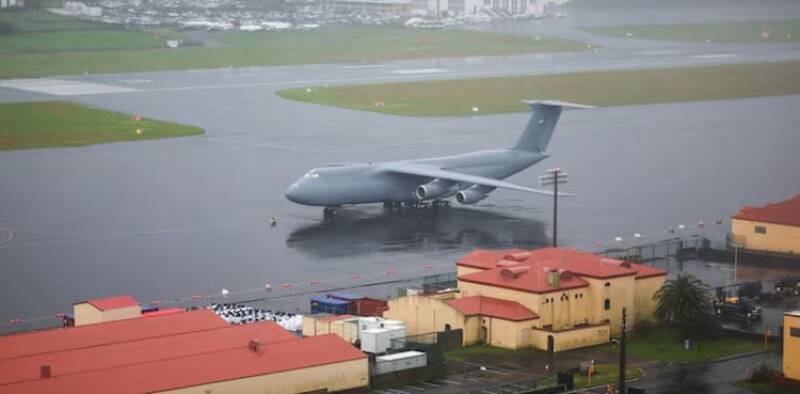
Portugal has confirmed it authorized the United States to use the Lajes air base in the Azores for military operations, but with a crucial condition: no attacks on civilian infrastructure. This agreement highlights Portugal's delicate position in balancing its alliance with the U.S. and its commitment to international humanitarian law.
Foreign Minister Paulo Rangel stated in a parliamentary hearing that Portugal permitted 76 U.S. aircraft landings at the Lajes air base and 25 overflights of Portuguese territory since the start of escalating tensions between the U.S., Israel and Iran. He emphasized that the authorization was granted specifically under the condition that these operations would not be used to target civilian areas. The U.S. has reportedly adhered to this stipulation.
The Lajes Air Base, situated in the Azores archipelago in the Atlantic Ocean, holds immense strategic importance. Its location allows for rapid deployment and logistical support for military operations in Europe, Africa, and the Middle East. The base has been a critical asset for the U.S. military since World War II and remains a vital link in transatlantic security cooperation.
This news is significant for several reasons:
In our opinion, Portugal's approach demonstrates a responsible and nuanced foreign policy. By setting clear conditions for the use of the Lajes Air Base, Portugal is ensuring that its territory is not implicated in actions that violate international humanitarian norms. This could serve as a model for other countries hosting foreign military bases.
The U.S.'s compliance with Portugal's conditions, as stated by Minister Rangel, is also noteworthy. It indicates a willingness to respect the sovereignty and ethical concerns of its allies, even in the context of military operations. However, continued monitoring and verification of this compliance are essential.
This could impact the relationship between Portugal and other European countries, as some may see this as a strong stance against civilian targeting, while others may view it as a potential limitation on military capabilities.
The future of the Lajes Air Base agreement depends heavily on the evolving geopolitical landscape. Escalation in the Middle East or elsewhere could increase the demand for the base's use, potentially putting further pressure on Portugal to balance its security commitments with its humanitarian principles. It is possible that Portugal will continue to refine the terms of the agreement to address future challenges and ensure compliance with international law.
We anticipate further scrutiny of the operations conducted from the Lajes Air Base. Transparency and accountability will be crucial in maintaining public trust and ensuring that Portugal's conditions are upheld. Civil society organizations and international bodies will likely play a role in monitoring the use of the base and advocating for adherence to international humanitarian law.
Furthermore, the situation may require increased dialogue between Portugal and the U.S. to manage expectations and address any potential disagreements that may arise. This collaboration is vital for sustaining a healthy and productive alliance while respecting Portugal's sovereign decisions.
























