Dell XPS 16 (2026) Review: Style Over Substance?
Our in-depth review of the Dell XPS 16 (2026). We break down its beautiful design, powerful specs, battery life, and whether it's worth the high price tag.
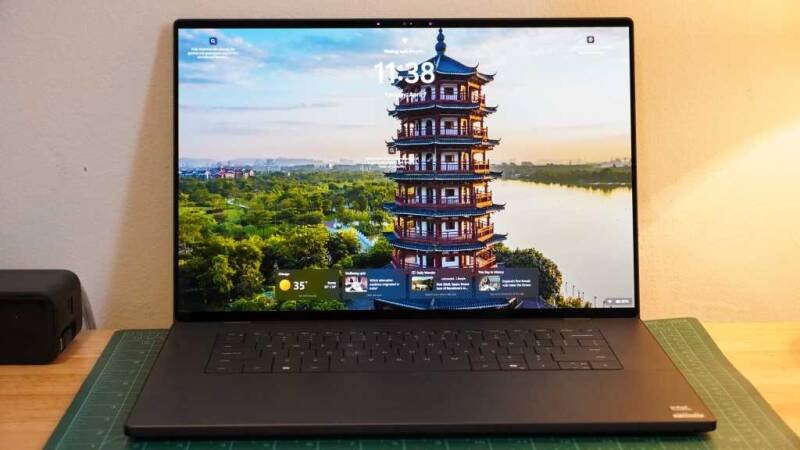



Our in-depth review of the Dell XPS 16 (2026). We break down its beautiful design, powerful specs, battery life, and whether it's worth the high price tag.
Dell's XPS laptops are known for their premium design and build quality, and the XPS 16 (2026) is no exception. It boasts a stunning display, powerful speakers, and impressive battery life. However, it also comes with a high price tag, some usability drawbacks, and performance that doesn't always match its competitors.
Our Verdict: The Dell XPS 16 is a beautiful machine with solid hardware, but other devices are often more practical, pleasant to use, and more affordable.
The tested configuration features an Intel Core Ultra X7 358H processor, 32GB of RAM, a 1TB SSD, and a vibrant OLED touchscreen display. The base model starts at $1,749, but you'll sacrifice features like the OLED display and dedicated graphics.
The XPS 16 continues Dell's tradition of elegant design, using premium materials like CNC aluminum and Gorilla Glass. It's a sleek and attractive laptop, though some find the keyboard deck sparse. Dell has slightly improved the trackpad by adding subtle ridges to demarcate its edges. The laptop feels sturdy but is a bit heavier than some competitors.
While the keyboard has seen some improvements over previous models, it remains a point of contention. The keys have a tactile contour and good stabilization, but the zero-lattice design, with almost no gap between the keys, makes it difficult to quickly correct finger positioning. The trackpad is smooth and responsive, but the physical click feels a little odd, even with haptic feedback.
In our opinion, the keyboard is the main reason for pause when considering the XPS 16.
The display is a standout feature of the XPS 16. The 16-inch OLED touchscreen offers a sharp resolution, vibrant colors, and excellent contrast. The 120Hz refresh rate provides smooth visuals, while the variable refresh rate helps save battery. The bottom-firing speakers deliver impressive audio quality with fullness and pronounced stereo separation.
The webcam and microphone setup is good, with the webcam offering solid clarity and the microphone capturing voice well. The laptop also features facial recognition for quick logins. However, the connectivity is limited, with only three Thunderbolt 4 ports and a 3.5mm audio jack. You'll need dongles or adapters for HDMI or USB-A devices, and there's no SD card support.
The XPS 16 is equipped with an Intel Core Ultra X7 358H processor and Intel Arc B390 graphics, offering capable performance for everyday computing. However, it prioritizes efficiency over raw power, resulting in performance that often lags behind competitors with similar or even older hardware. The laptop also appears to throttle performance to maintain cool and quiet operation.
This focus on efficiency shines through in battery life.
The Dell XPS 16 excels in battery life, lasting over 20 hours in our video playback test. This is an impressive result for a laptop with such a large screen. In everyday use, it can easily last through a workday on a single charge.
This review matters because it highlights the trade-offs consumers face when choosing a premium laptop. The Dell XPS 16 is undeniably beautiful and offers a great user experience in certain areas. However, potential buyers need to be aware of its performance limitations and connectivity issues before making a purchase. It emphasizes that chasing the best specs on paper doesn't always translate to the best real-world performance or overall user experience. In other words, you're paying a premium for the look and feel over pure power. This could impact purchasing decisions for those prioritizing raw processing power, content creation and gaming capabilities.
Our analysis suggests that Dell is targeting a specific market segment with the XPS 16: users who prioritize aesthetics, portability, and battery life over raw performance. While the laptop is capable of handling everyday tasks, it's not the best choice for demanding workloads like video editing or gaming. The limited port selection also makes it less appealing for users who need to connect multiple peripherals. In our opinion, it is better to have more ports and dongle down than fewer ports and always have to carry a dongle up!
Looking ahead, Dell could improve the XPS 16 by addressing its performance limitations, expanding its port selection, and refining the keyboard design. Future iterations might benefit from incorporating more advanced cooling solutions to prevent throttling. Dell might face increased competition from other laptop manufacturers that are pushing the boundaries of performance and design. It will be interesting to see how Dell responds to these challenges in the coming years. We expect to see the industry continue to push for better integrated graphics performance. In our opinion, as integrated graphics continue to get more powerful, they will start to close the gap with the discrete graphics card market.
























