China's Hypersonic Engine: A Game Changer in Aviation?
China claims a breakthrough in hypersonic jet engine technology, potentially reaching Mach 6 without mode changes. What does this mean for the future of aviation and global power dynamics?
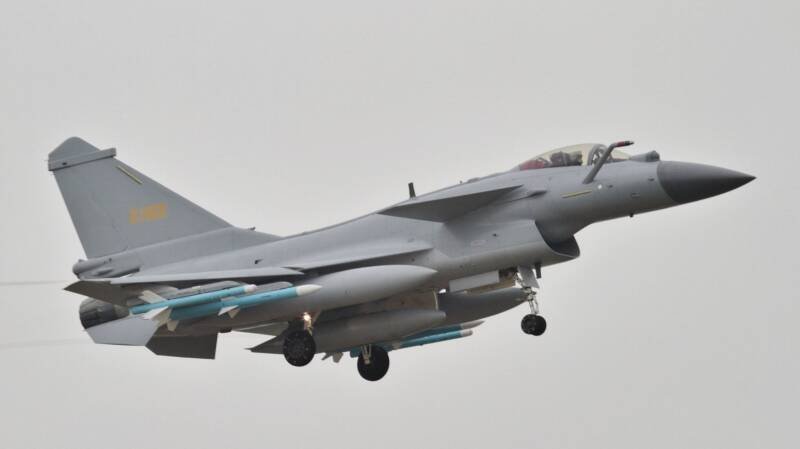



China claims a breakthrough in hypersonic jet engine technology, potentially reaching Mach 6 without mode changes. What does this mean for the future of aviation and global power dynamics?
A new report suggests China has made a significant leap in jet engine technology, potentially developing an engine capable of reaching speeds of Mach 6 (six times the speed of sound) without needing to switch between different operating modes. This is a major advancement that could have profound implications for both civilian and military aviation.
Traditional jet engines operate efficiently at lower speeds. As speeds increase, they often need to switch to a different type of engine, such as a ramjet or scramjet, to maintain efficiency and performance. These transitions, called "mode changes," are complex and can cause performance bottlenecks. An engine that can operate across a wide range of speeds without mode changes offers significant advantages.
Think of it like a car that can seamlessly transition from city driving to highway speeds without needing to shift gears in a complicated way. A single engine capable of high-speed without mode change is more efficient and less prone to mechanical failure.
According to the reports, Chinese researchers claim to have developed a novel engine design that achieves this seamless high-speed operation. While details remain scarce and shrouded in secrecy, the implications are substantial.
This potential breakthrough could revolutionize various sectors:
In our opinion, this news should be viewed with cautious optimism. While the claims are significant, independent verification is needed. However, even if the technology is not fully mature, it highlights China's growing capabilities in advanced engineering and its commitment to pushing the boundaries of aerospace technology. The fact that they are even attempting something this ambitious speaks volumes.
It's also important to consider the strategic implications. A successful hypersonic engine would give China a significant advantage in military technology. This could impact the balance of power and potentially lead to an arms race as other nations scramble to develop similar capabilities.
While concrete details are scarce, sources hint at novel design principles. It likely involves advanced materials capable of withstanding extreme temperatures and pressures, along with sophisticated control systems to manage airflow and combustion at hypersonic speeds.
The development of a practical hypersonic engine is a long and challenging process. It will require significant investment in research and development, as well as rigorous testing and validation. However, if China's claims are accurate, or even partially accurate, we can expect to see further progress in this field in the coming years.
This could impact international relations, prompting other countries to accelerate their own hypersonic research programs. It's a technological race that will likely unfold over the next decade, with significant implications for global security and economic competitiveness.
Ultimately, the success of this technology will depend on overcoming significant engineering challenges. However, the potential rewards are so great that nations around the world are sure to pursue this avenue of development rigorously. We will continue to monitor this story closely.