CCP Propaganda Seizes Tomb Sweeping Day: Implications for Taiwan
China uses Tomb Sweeping Day for propaganda, impacting Taiwan relations. Understand the context, implications, and future outlook in our analysis.



China uses Tomb Sweeping Day for propaganda, impacting Taiwan relations. Understand the context, implications, and future outlook in our analysis.
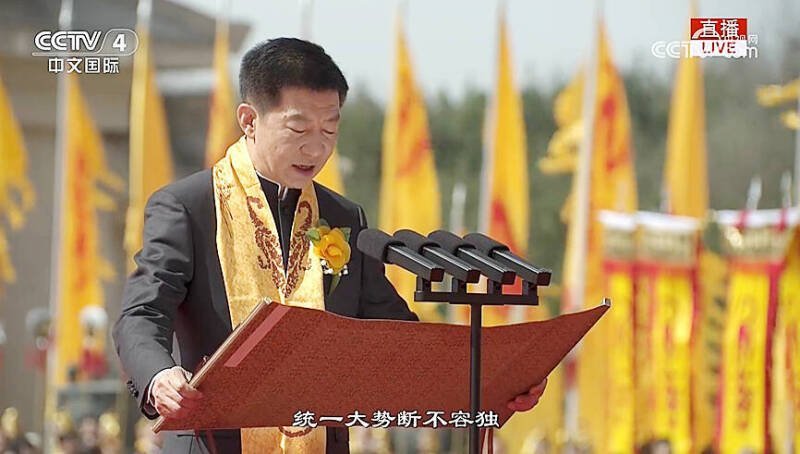
Tomb Sweeping Day, also known as Qingming Festival, is a traditional Chinese holiday where people honor their ancestors. It's a time for family gatherings, remembrance, and paying respects to those who have passed. However, the Chinese Communist Party (CCP) has increasingly used this cultural event as a platform for political propaganda, particularly concerning Taiwan.
Qingming Festival is more than just a day off. It’s deeply rooted in Chinese culture and emphasizes filial piety and respect for elders. Families visit gravesites, clean them, offer food and flowers, and burn incense. It's a solemn occasion for reflection and connection to one's heritage. This makes it a potent vehicle for messaging, if wielded carefully.
The CCP leverages the emotional resonance of Tomb Sweeping Day to promote its narrative of "reunification" with Taiwan. State-controlled media often feature stories highlighting shared ancestry and cultural heritage between mainland China and Taiwan, framing Taiwan as an inseparable part of China. These narratives often downplay or ignore the distinct political, social, and cultural identity that has developed in Taiwan over decades.
Furthermore, the CCP sometimes organizes cross-strait events during Qingming Festival, inviting Taiwanese citizens to visit ancestral graves on the mainland. While these events may appear harmless on the surface, they serve as a subtle form of political influence, reinforcing the CCP's claim of cultural unity and downplaying the existing political divide.
The CCP's use of Tomb Sweeping Day for propaganda is not simply about cultural promotion; it's a deliberate strategy in its broader political warfare against Taiwan. By framing Taiwan as an inherent part of China based on shared ancestry, the CCP seeks to undermine Taiwan's claim to sovereignty and erode support for its independence.
This matters because it directly impacts the delicate balance of cross-strait relations. The CCP's propaganda efforts aim to shape public opinion both in mainland China and Taiwan, influencing perceptions of national identity and the desirability of "reunification." This can have long-term consequences for the future of Taiwan and the stability of the region.
In our opinion, the CCP's manipulation of Tomb Sweeping Day is a cynical attempt to exploit cultural sensitivities for political gain. While acknowledging shared cultural roots is important, it should not be used to justify political coercion or undermine the democratic aspirations of the Taiwanese people.
This propaganda campaign is particularly concerning because it targets emotions and deeply held values. By associating "reunification" with respect for ancestors, the CCP attempts to make it seem like a morally righteous and culturally appropriate goal. This is a subtle but powerful form of persuasion that can be difficult to counter.
The impact of this propaganda is hard to precisely quantify, but it undoubtedly contributes to a climate of pressure and uncertainty for Taiwan. It normalizes the CCP's claims over the island and reinforces the narrative that Taiwan's future lies in "reunification," regardless of the wishes of the Taiwanese people.
The CCP is likely to continue using Tomb Sweeping Day and other cultural events to promote its agenda regarding Taiwan. We anticipate an increase in cross-strait cultural exchange programs and media campaigns designed to highlight shared ancestry and cultural heritage. This could impact Taiwanese public opinion, especially among older generations.
However, it is also important to note that Taiwan has a vibrant and resilient civil society that is actively working to counter CCP propaganda and promote its own unique identity. Taiwanese media outlets, cultural organizations, and political leaders are increasingly aware of the CCP's efforts and are taking steps to defend Taiwan's sovereignty and democratic values.
Moving forward, it is crucial for the international community to recognize and condemn the CCP's use of cultural events for political propaganda. Supporting Taiwan's democratic institutions and its right to self-determination is essential for maintaining peace and stability in the region. This includes actively countering misinformation and promoting a more balanced and nuanced understanding of cross-strait relations.