Cameroon President Calls for Pope's Peace Message Amidst Global Tensions
Cameroon's President Paul Biya emphasizes the need for Pope's message of peace amidst global unrest. Explore the significance, analysis, and future implications of this call.



Cameroon's President Paul Biya emphasizes the need for Pope's message of peace amidst global unrest. Explore the significance, analysis, and future implications of this call.
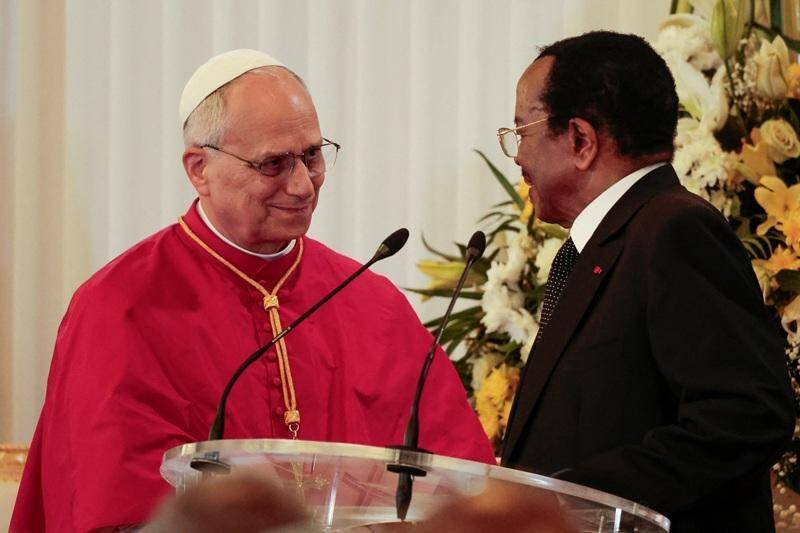
Cameroon's President, Paul Biya, made a strong statement on Wednesday, asserting that "the world needs the message of peace" brought by Pope Leo XIV. This declaration was delivered during the Pope's visit to Cameroon, marking the first day of his trip to the African nation. The statement highlights the perceived importance of the Pope's role in fostering peace on a global scale, particularly in these times of increasing international instability and conflict.
The Pope's visit to Cameroon is a significant event, not only for the country but also for the wider African continent. As the spiritual leader of the Catholic Church, his presence carries considerable weight, and his pronouncements on issues of peace, justice, and social welfare are often closely followed by millions worldwide. Cameroon, like many other African nations, faces numerous challenges, including political instability, economic hardship, and security threats. In this context, the President's call for the Pope's message of peace takes on added significance.
This news matters because it underscores the enduring influence of religious leaders in international affairs. In a world often dominated by political and economic considerations, the moral authority of figures like the Pope can serve as a powerful voice for peace and reconciliation. The President's appeal also highlights the specific challenges facing Cameroon and the broader African continent, where conflicts and instability continue to hinder development and threaten the lives of millions. The Pope's engagement could potentially act as a catalyst for dialogue and conflict resolution.
In our opinion, President Biya's statement is likely a strategic move aimed at leveraging the Pope's influence to promote peace and stability within Cameroon and the region. By aligning himself with the Pope's message, he hopes to gain legitimacy and support both domestically and internationally. The timing of the visit is also crucial. With several conflicts raging around the world, the need for a strong, unified voice advocating for peace is more urgent than ever.
It is important to note that while the Pope's message is powerful, its effectiveness depends on various factors, including the willingness of conflicting parties to engage in dialogue and the support of other international actors. In addition, we must acknowledge the internal political context of Cameroon. Biya has been in power for a long time, and his appeal to the Pope may also serve to bolster his own position and image.
The Pope's visit could potentially lead to increased engagement by the Vatican in peacebuilding efforts in Cameroon and the wider African region. This could involve mediating between conflicting parties, providing humanitarian assistance, and advocating for policy changes that promote justice and equality. However, the extent of the impact will depend on the Pope's specific actions and the response from other stakeholders.
This could impact Cameroon's relationship with the international community, potentially leading to increased aid and investment if the country is perceived as actively working towards peace and stability. Furthermore, the visit provides an opportunity for the Pope to address critical issues such as poverty, corruption, and human rights, which are essential for long-term peace and development.
The long-term effects of this visit remain to be seen. If the Pope's message is translated into concrete actions, it could have a positive impact on Cameroon and the surrounding region. However, without sustained effort and commitment from all parties involved, the impact may be limited. It’s a critical opportunity to foster real change, but success hinges on genuine commitment beyond the initial visit.