AIADMK Chief Says DMK's Stance Hurts Tamil Nadu's Funding - Analysis
AIADMK leader Palaniswami criticizes the DMK's confrontational approach to the central government, claiming it hinders Tamil Nadu's access to vital funds. We analyze the situation.
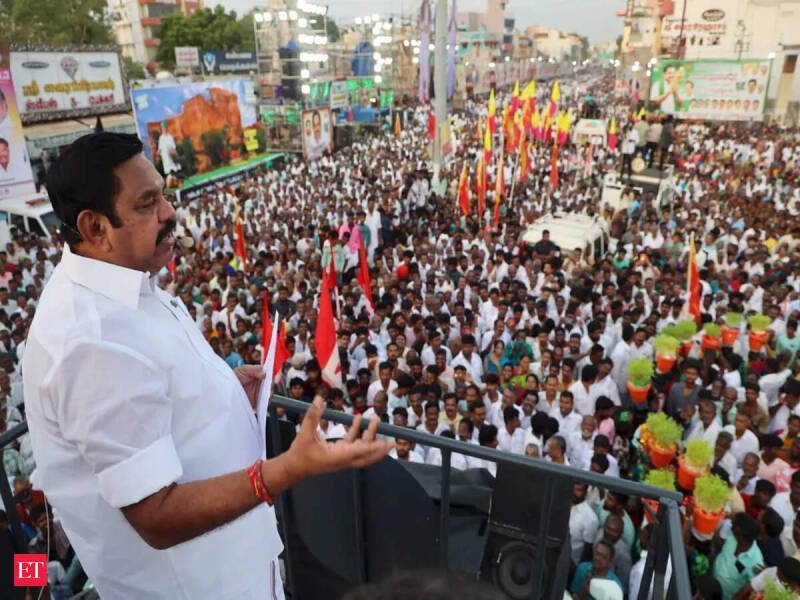



AIADMK leader Palaniswami criticizes the DMK's confrontational approach to the central government, claiming it hinders Tamil Nadu's access to vital funds. We analyze the situation.
Edappadi K. Palaniswami (EPS), the leader of the AIADMK, a major political party in Tamil Nadu, has publicly criticized the current DMK government, accusing them of damaging the state's chances of receiving adequate funding from the central government in Delhi.
EPS stated that the DMK's confrontational approach towards the central government, led by the BJP, has hindered the flow of financial resources to Tamil Nadu. He made these remarks during a joint campaign appearance with T. T. V. Dhinakaran, another political figure in the state. He implied that a more cooperative relationship with the central government would have yielded better financial outcomes for Tamil Nadu.
Palaniswami's argument rests on the idea that states reliant on central funding need to maintain amicable relations with the central government. He suggests that by adopting an oppositional stance, the DMK is essentially shooting itself in the foot, jeopardizing crucial financial support needed for various developmental projects and welfare programs in Tamil Nadu.
This issue highlights the complexities of federalism in India. The relationship between state governments and the central government is often fraught with political tensions, particularly when different parties are in power at the state and national levels. The flow of funds from the center to the states is a critical aspect of this relationship, directly impacting the state's ability to deliver services to its citizens. A perceived disruption of this flow, as alleged by Palaniswami, raises questions about the fairness and effectiveness of the financial distribution mechanism.
The reality of the situation is likely more nuanced than either side presents. While maintaining a cooperative relationship with the central government can undoubtedly facilitate smoother negotiations for funds, it's also the central government's responsibility to allocate resources fairly based on established criteria and formulas, irrespective of the political affiliations of the state government. In our opinion, the AIADMK is using this issue to politically damage the DMK. This could impact public perception of the DMK's governance capabilities.
However, it's also true that a constant state of conflict can be detrimental. If the DMK consistently adopts a highly critical stance on every central government policy, it could create an environment where negotiations become more difficult. Constructive criticism is vital, but constant antagonism might not be the most effective strategy for securing the state's financial interests.
The future relationship between Tamil Nadu and the central government will likely depend on several factors. The outcome of upcoming elections, both at the state and national levels, will play a significant role. Furthermore, the willingness of both sides to engage in constructive dialogue and find common ground will be crucial.
We believe that Tamil Nadu needs to find a way to balance its regional interests and the imperative of cooperative federalism. This means advocating for the state's rights and needs while also maintaining a working relationship with the central government. A focus on evidence-based arguments, clear communication, and a willingness to compromise will be key to ensuring that Tamil Nadu receives the funding it needs to thrive.