AI Trucks Revolutionizing Mining: Record-Breaking Automation
Learn how AI-powered trucks are transforming coal mining in China, setting new records and potentially reshaping the future of the industry.



Learn how AI-powered trucks are transforming coal mining in China, setting new records and potentially reshaping the future of the industry.
Imagine a world where massive trucks operate without drivers, hauling tons of materials day and night, guided only by artificial intelligence. That future is already here, at least in one Chinese open-pit coal mine.
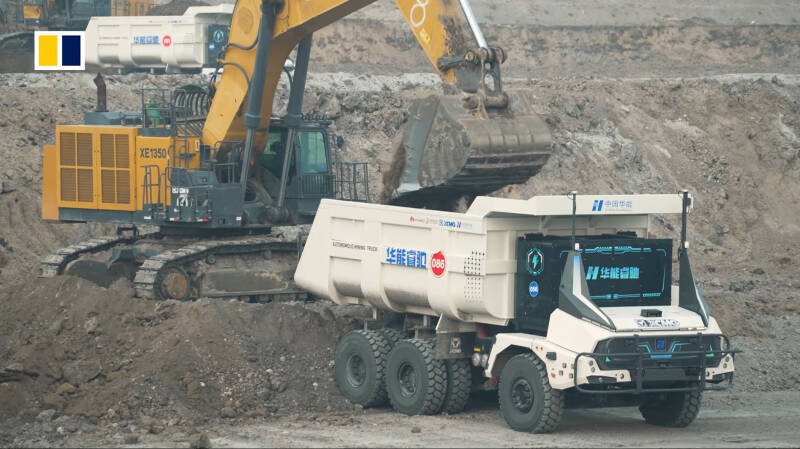
In 2025, a Chinese coal mine deployed a fleet of 100 autonomous, AI-powered trucks. These aren't your average self-driving vehicles; they're specifically designed and programmed to navigate the complex and dangerous environment of an open-pit mine.
These AI-driven trucks have already achieved significant milestones, setting three new records for autonomous mining trucks. While the specifics of these records haven't been widely publicized, the achievement itself speaks volumes about the progress and potential of this technology.
This isn't just a feel-good story about technological advancement. It represents a potential paradigm shift in the mining industry, with implications for efficiency, safety, and even employment. Here's why it matters:
The deployment of these 100 AI-powered trucks is a significant step forward in the automation of the mining industry. While the exact details of the technology and its performance are still emerging, the fact that they've set three records is a strong indicator of their effectiveness.
In our opinion, this initiative highlights China's growing leadership in AI and autonomous vehicle technology. The willingness to invest in and deploy these technologies in challenging environments like open-pit mines demonstrates a commitment to innovation and efficiency.
Of course, there are also potential challenges. The technology is still relatively new, and there could be unforeseen issues with reliability, maintenance, and adaptability to changing conditions. There are also ethical considerations related to job displacement, which need to be addressed proactively.
This could impact the workforce. As mines become increasingly automated, there will be a need for workers with new skills, such as AI maintenance, remote operation, and data analysis. Retraining and education programs will be crucial to ensure a smooth transition for workers who may be displaced by automation.
The future of mining is likely to be increasingly automated, with AI playing a central role. We expect to see further advancements in autonomous vehicle technology, as well as the integration of AI into other aspects of mining operations, such as exploration, processing, and resource management.
We also anticipate growing demand for skilled workers who can design, implement, and maintain these advanced technologies. Companies that invest in training and education will be best positioned to thrive in this new era of mining.
In our view, the success of this Chinese project could serve as a catalyst for the adoption of similar technologies in mines around the world. As the technology matures and becomes more cost-effective, we expect to see more mining companies embracing AI and automation to improve efficiency, safety, and sustainability.
The move towards autonomous vehicles in the mining industry will be something to watch closely over the next few years. This is a space of rapid development, and the outcomes could be substantial for the economy as well as the mining industry.