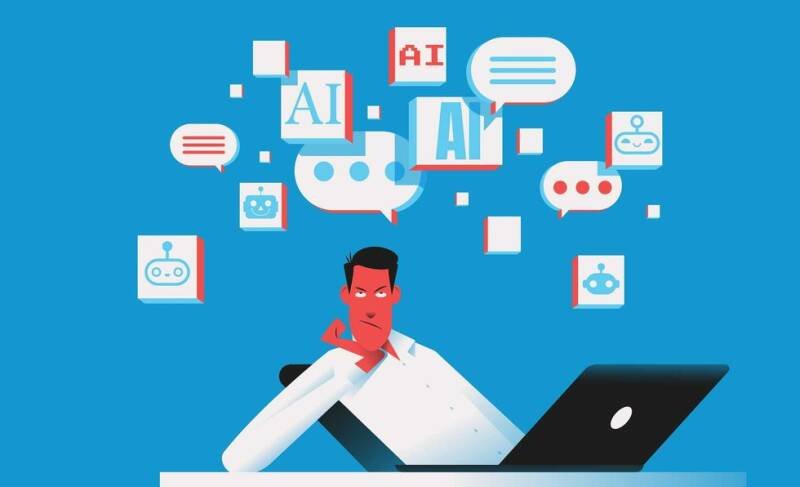
AI: Powerful Tool, Not a Wise Master - Understanding AI's Limits
Artificial intelligence is revolutionizing our world, but it's crucial to understand its limitations. AI is powerful but not wise, requiring human oversight and critical thinking. Learn more.
AI: Powerful Tool, Not a Wise Master - Understanding AI's Limits
AI: Powerful Tool, Not a Wise Master - Understanding AI's Limits
Artificial Intelligence (AI) is everywhere, transforming industries and daily life. But the rapid rise of AI has also sparked concerns about job losses, environmental impact, and the potential for AI to surpass human control. A lot of this stems from the fact that AI is often over-hyped and oversold to the general public. It is important to recognise AI as the amazing and useful tool that it is, but to not give it more credit than it is due.
Understanding AI: It's Not Superhuman
AI is essentially very fast processing of huge amounts of data. It excels at identifying patterns and making predictions. However, true intelligence, knowledge, understanding, and wisdom are different. AI is amazing and useful despite being incomprehensible to most of us, but AI is not infallible.
- Intelligence: The ability to process information into a coherent framework.
- Knowledge: Organized information that helps us understand the world.
- Understanding: Awareness of the significance and meaning of knowledge.
- Wisdom: Judgment informed by experience and awareness of limitations.
These distinctions highlight that while AI can process data incredibly fast, it lacks the nuanced understanding and critical thinking that humans possess.
Why This News Matters
It's crucial to understand AI's limitations to avoid blindly trusting its outputs. Over-reliance on AI without critical evaluation can lead to errors, biases, and ultimately, poor decisions. This is especially important as AI becomes more integrated into critical areas like finance, healthcare, and governance. The fact is that people trust the outputs of machines more than they trust the outputs of other people, but this is not appropriate. We must be able to question and challenge these powerful tools.
Our Analysis
In our opinion, the key takeaway is that AI should be viewed as a tool that *augments* human capabilities, not *replaces* them. We need to develop a healthy skepticism towards AI results and prioritize human oversight, especially in complex and sensitive situations.
Examples of AI errors are becoming increasingly common. As the original article notes, AI systems can "hallucinate" information, creating false details. This can occur even in seemingly simple tasks, such as Google searches, let alone more complicated tasks that require nuance, insight, and consideration. For example, one professor was recently given false financial advice by ChatGPT to invest in a fund that did not actually exist.
This is because AI models are trained on data that reflects human biases and imperfections. Furthermore, developers may be incorrectly training machines to make decisions about subjective human topics as if they were objective math problems. Therefore, it's essential to question AI's outputs and ensure that humans, with their critical thinking skills, remain in the loop.
Future Outlook
The future of AI depends on responsible development and deployment. Here are some key considerations:
- Data Quality: Improving the quality and diversity of data used to train AI models is essential to minimize bias.
- Transparency: AI creators should be transparent about the biases and perspectives built into their systems.
- Ethical Frameworks: We need robust ethical guidelines and regulations to govern AI development and use.
- Critical Thinking: Education and training are crucial to equip people with the skills to critically evaluate AI outputs.
This could impact how AI companies approach product development, how governments regulate AI, and how individuals interact with AI-powered tools. Ultimately, a balanced approach that leverages AI's power while mitigating its risks is essential for realizing its full potential.
Improving Data Sources
We suggest that AI developers consider the quality of the data sources they use to train their models. Many online data sources intentionally mislead to advance political agendas. Therefore, they should exercise better judgment about the data that is being used to train these incredible new AI technologies.
Recognizing AI as a Human Tool
It's important to remember that AI is a product of human invention. AI is ultimately just the latest, greatest, but still imperfect, implementation invented and used by *homo sapiens* to make life better for *homo sapiens*.